
Going Ahead
by Matt Hart | Top photo: Sam Hill
On late fatherhood and scouting the mountains for my young girls
In Chamonix, the mountains are too big to ignore and too beautiful to keep to yourself. They crowd in from every direction, impossibly high, indifferent to the hustle down below.
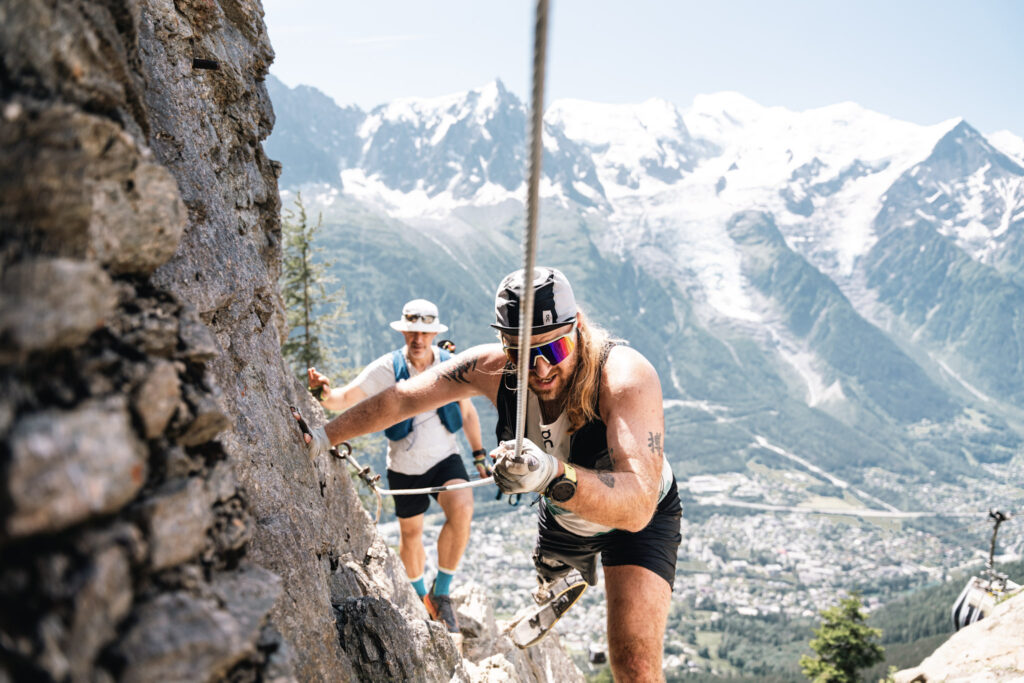
When I arrived in August, it was my first real running trip since my daughters were born. On touchdown, I dropped my bag and ran straight to the closest trail, the famed Chamonix VK, which began across the street. This vertical trail ascent is so steep in places they’ve bolted chains into the rock to help you haul yourself upward.
Trail running is my daily practice—the thing that grounds me, keeps me fit, allows me to express a competitive nature, and burns off enough energy to allow me to function in everyday life. I was moving surprisingly well for having just traveled from the east coast of America, running on no sleep.
Technical terrain forces you to focus, to narrow your thoughts to the immediate: the next move, the next foot or hand placement. And I was focused, until the exposure got serious. Until a fall would have meant something life-altering. And then, briefly, involuntarily, I thought about my daughters. What might happen to them if I’m hurt badly, or worse.
I know this cognitive distortion, aptly named “catastrophizing.” I’ve been forcing it out of my head for years—just last week in fact, at the top of Tuckerman Ravine, skis pointed toward the headwall’s rollover, fifty-five degrees of consequence dropping away beneath me… I let it pass like a cloud and focused on the moment, the next turn.
This mountain lifestyle is one I built before I was someone’s father, and it’s pretty well ingrained in who I am at this point. I’m not sure I know how to stop, or if I want to. But the calculus has quietly shifted. The mountains feel the same. I just carry more with me now.
For most of my adult life, the mountains were mine alone. I was chasing something—a Kilian-style career as a north star, ultramarathons as a vocation, the next race as a reason to decline everything else. That maniacal focus on my craft meant I missed things, like friends’ weddings, for example. I would write it on the RSVP card: can’t make it, I have a race. I thought that was sufficient. Understandably, some of those friendships drifted away quietly in the years that followed, and I was too focused on my next training block to notice until it was too late.
Running, however, has also brought me most of the good things in my life. It led to a Boulder Running Company group run, which brought me to the woman who would become my wife. She was already a serious trail runner. She understood the mountains not as a hobby but as a language. Our daughters were born into that language. It’s ambient in our house—the gear by the door, the early mornings, the maps on the table. When my two-year-old, Ava, wakes up and it’s just me in the house, she says, “Momma ski?” or “Momma run?”
I fell well short of becoming Kilian Jornet, but I landed somewhere better, for me. I find comfort in the math of it, even if the math only makes sense in reverse: the single-minded focus and immaturity that delayed fatherhood is the same thread that leads directly to my daughters. I got a late start. They got a father who already knew the way.
What I couldn’t stop wondering, as I peered across Chamonix valley for a glimpse of the Mont Blanc summit, was whether I’d still be leading when they were ready to follow. Or will I be broken and sedentary when they are finally pushing uphill?
Back at the apartment, I received a text from Doug Mayer—American trail running liaison, connector of people, force of nature. He was driving to Courmayeur in the morning. There was a race. Did I want to join them? Did I have a helmet? I said yes before I realized what I was getting myself into.
We left at 4:20am.
The Courmayeur Double VK is a straight line up the Italian side of Mont Blanc—7,533 vertical feet of uphill from town, to the top of the ski resort, above the glaciers, and into technical rocky terrain. I’d done adventure races where helmets were mandatory, but never a running race. On the upper section, it became apparent why this was required, as rockfall came flying past us. By the time we climbed above the glaciers it was snowing. My fingers stopped working. I was too wrecked to take photos. I was also, without question, having the time of my life.
In twenty years of ultramarathons, it was the gnarliest race course I’d ever run. I climbed over the railing of the Skyway Gondola, smoked and grinning.
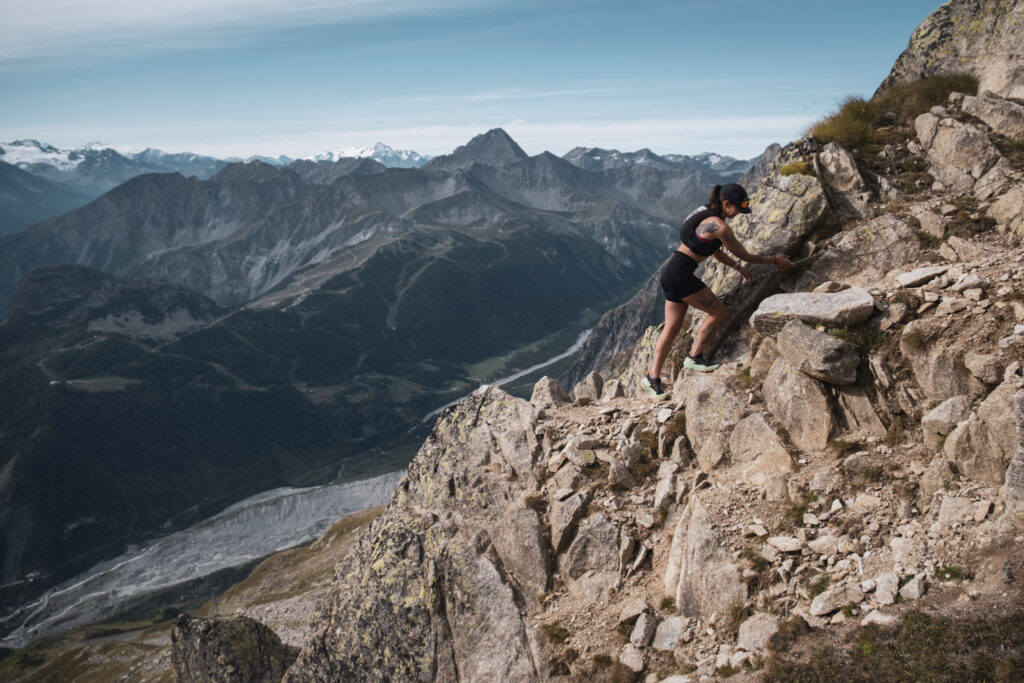
A few days later, I decided to tackle a classic: La Jonction—”the last rocky spur before the kingdom of ice”—on the Mont Blanc massif. This is a technical out and back that takes you to the junction of the Bossons and Taconnaz glaciers.
On a steep section near the top, the heel of my outsole wedged perfectly under a rock just as I unweighted it. When I stepped up, it nearly pulled my shoe clean off. I watched it teeter on my forefoot over an abyss, irretrievable if it fell. I stood there on one foot, hand groping the steep slope before me for balance, heart hammering.
At the highest point of land that meets the glacier, I could see climbers working their way down through the complicated terrain. Maybe the girls and I could climb Mont Blanc some day, I thought.
I stopped at Chalet du Glacier des Bossons on the run down for an omelette, then ice cream, and sat watching the glacier, wondering if my girls could hike this far. I reckoned my 5-year-old could, but I’d have to carry the 2-year-old in the hiking pack.
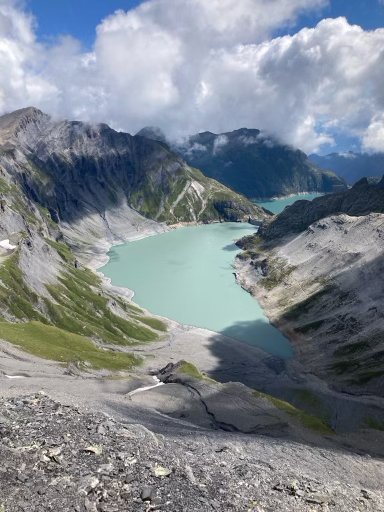
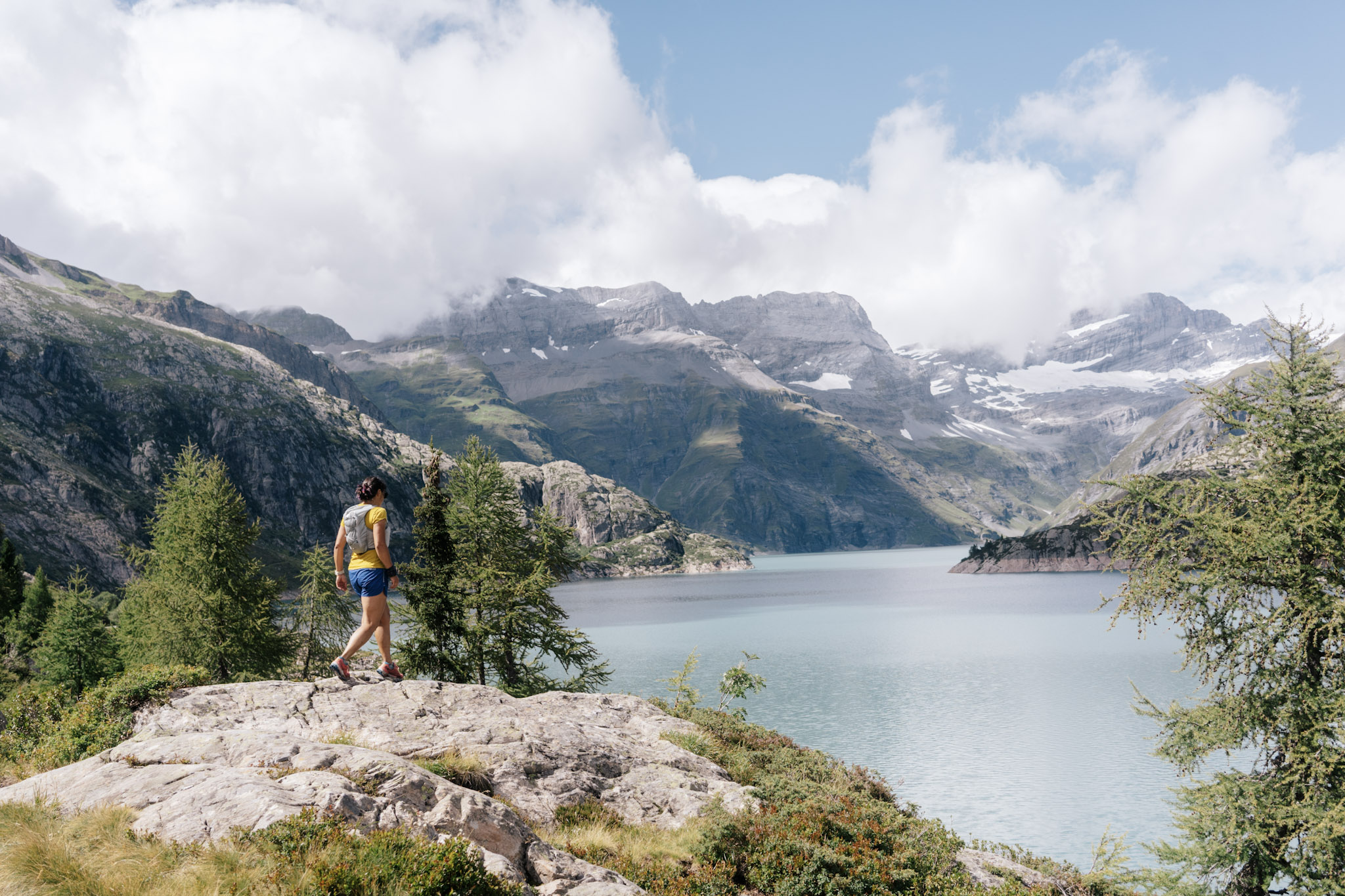
Another day had me running a big loop up the north ridge of Mont Buet, at 10,157 feet. Reaching the Col des Corbeaux along the Swiss border, the view opens suddenly to Lac d’Émosson—remote, still. I stopped long enough for a photo, then glanced down at the map.
Émosson. Close enough to my 5-year-old’s name, Emerson, to make me pause.
I stood there on wobbly legs, heartbeat pounding in my head, dehydrated, and wondered if my girls would ever run to a place like this—if I’d have the chance to bring them here before I’m too old to lead the way. I lingered longer than I needed to.
My final run was the Le Tour Dream Route, a 5,000-foot climb to the top of a glacial moraine and to the famed Refuge Albert Premier hut as the buy-in. The views of Le Tour glacier were amazing. Seventeen miles in total with nearly 7,000 feet of gain and I was properly cooked, but also feeling lucky that I had a chance to experience these mountains.
I returned to the States exhausted but also excited. I showed Emerson the picture of the Lake that shared her name. “It’s beautiful,” she said. “One day,” I told her, “I’ll take you there.”


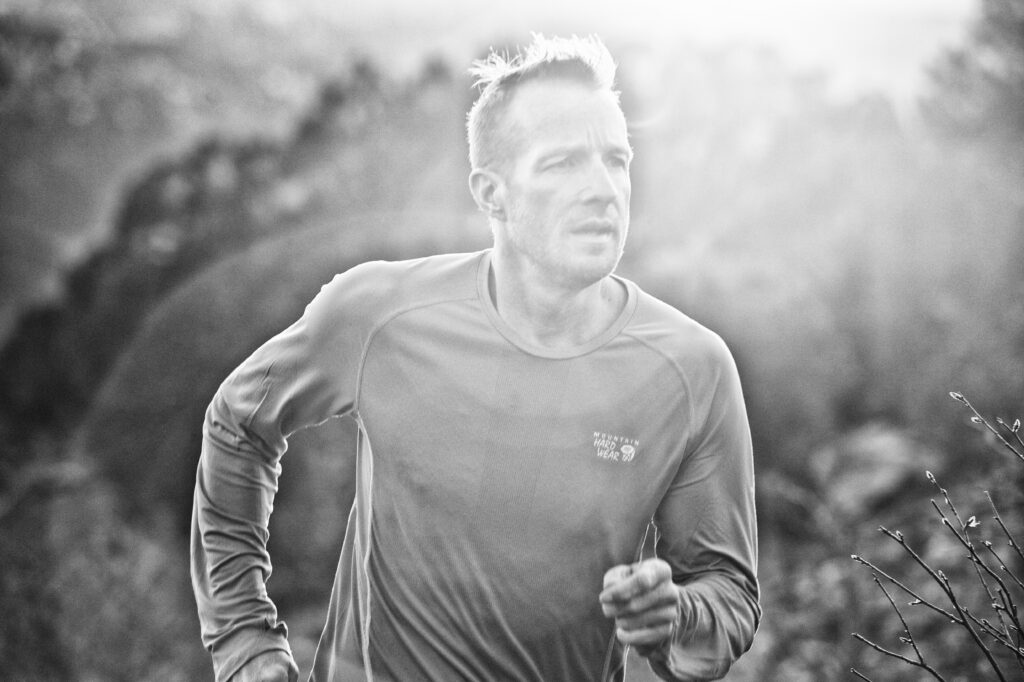
Matt Hart is a journalist and editor whose work has appeared in The New Yorker, The Atlantic, The New York Times, National Geographic, and Outside magazine, among others. His reporting has been selected for The Best American Sports Writing and optioned for film and television. He is the author of the 2020 book Win at All Costs. A longtime ultrarunner and ski mountaineer, Matt has called the Cascades, Wasatch, Front Range, and White Mountains home over the years.