
From Desert to Alps: Rachel Entrekin’s Road to UTMB
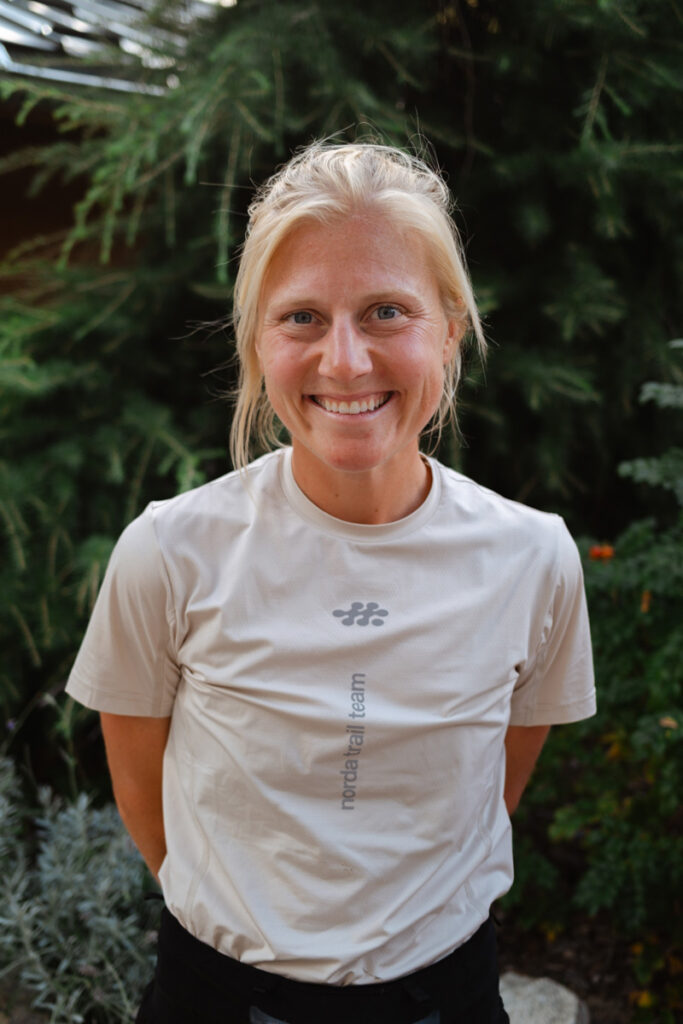
By Matt Hart | Top photo: Toni Spasenoski
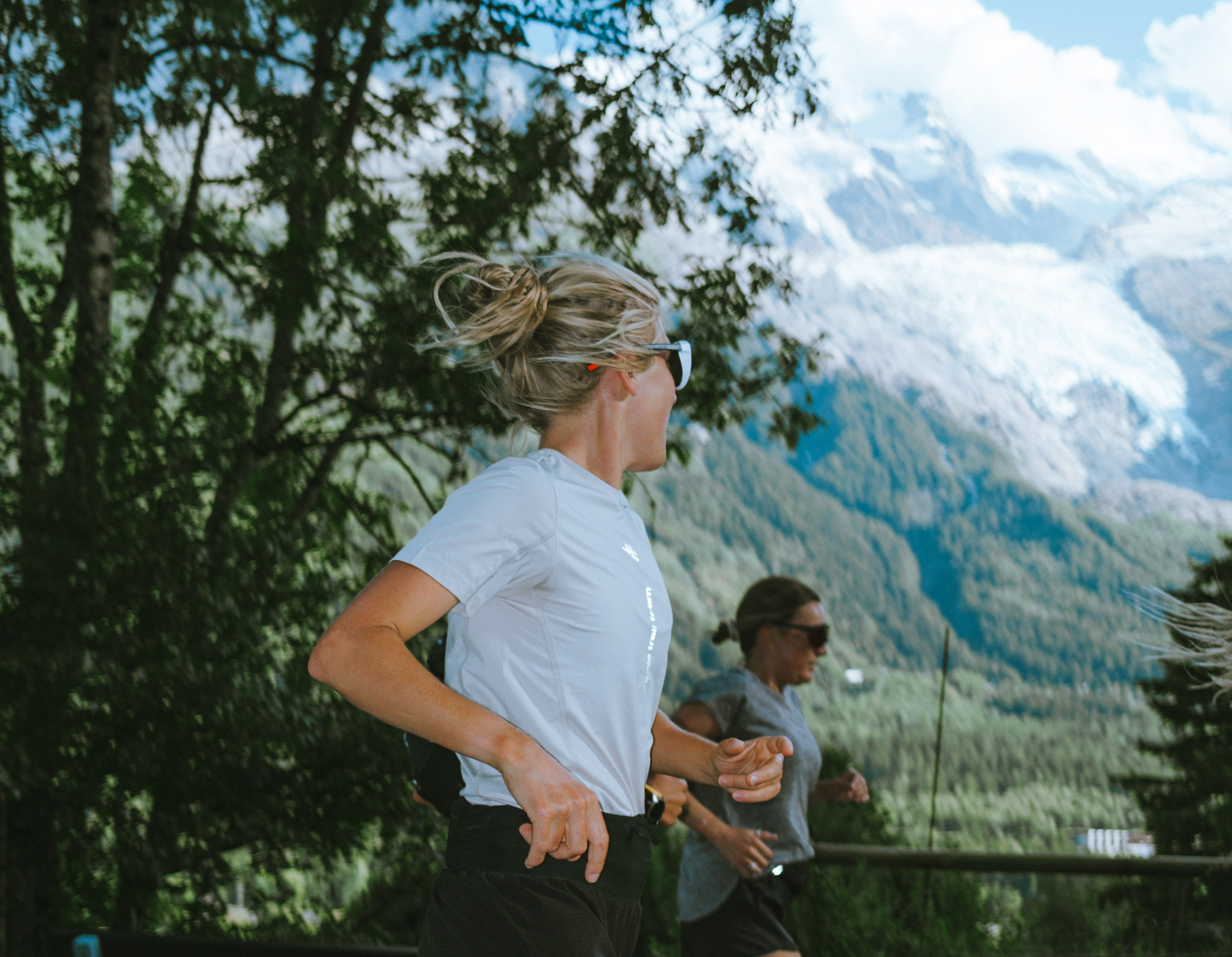
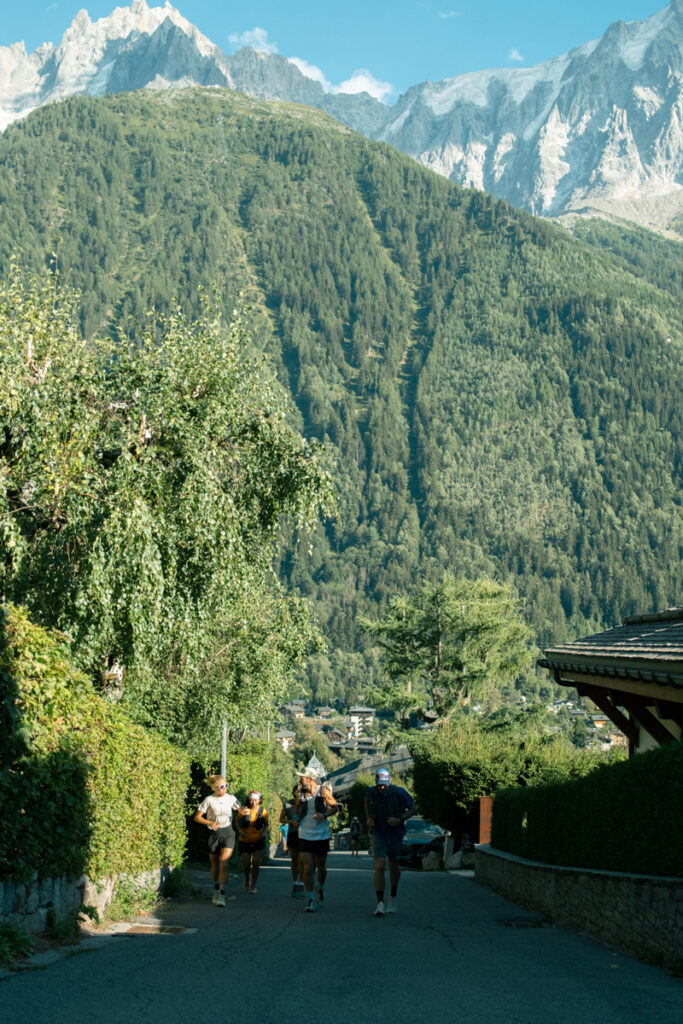
Running towards Saint Michel’s church in the center of Chamonix with Rachel Entrekin on a sunny Tuesday before UTMB® Mont-Blanc, I can’t help but wonder if she’ll be doing this triumphantly a month from now. The 35-year-old from Buena Vista, Colorado, has a resume of performances that will be tough to ignore come race day.
In May, Rachel became the first woman to win the Cocodona 250-miler outright, setting an overall course record of 56 hours, 9 minutes, and 48 seconds. This was her third victory at the point to point race through Arizona, a feat that earned her the title “Queen of Cocodona” and had media from Good Morning America to ABC News describing the win as a seminal moment in running. Now she’s here in France, training on the hallowed trails around Mont Blanc.
From the church we run south and then head up the east side of the Chamonix valley towards the Refuge du Plan de l’Aiquille. Rachel is light on her feet and runs with efficient grace. She wears her GPS watch on the palm side of her wrist, with the display facing down toward the trail, so she can’t see how fast she’s running. “I mean, I hope I’m going as fast as I can,” she says.
“Not today though, please,” I reply.
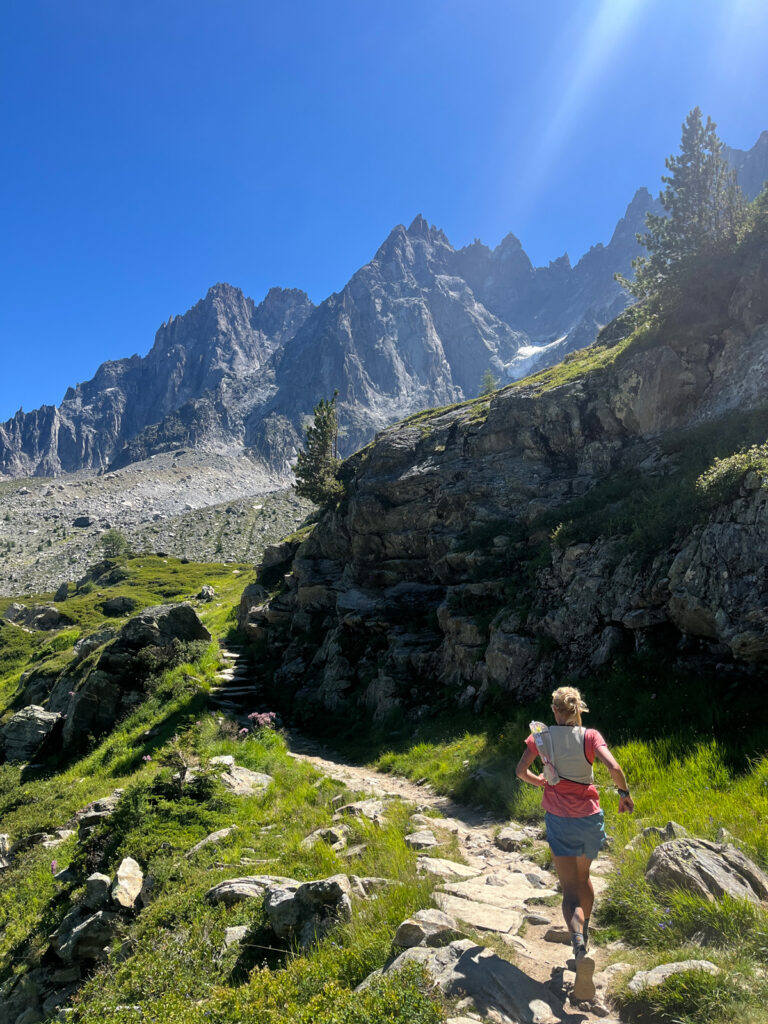
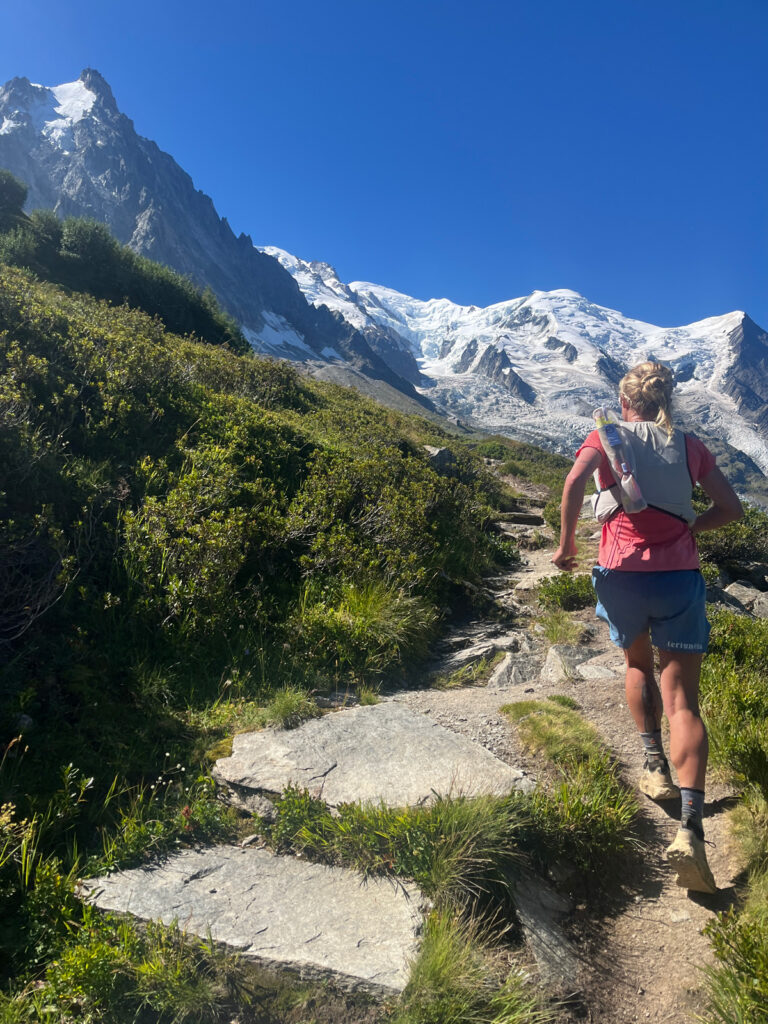
Rachel is quick-witted and funny, with a running tally of sarcastic one-liners over the course of our five-hour run. She’s clearly in on the joke of professional running and its absurdity, and therefore doesn’t take herself too seriously.
Asking questions between gasps on our initial 4,000 foot climb, I learned that Rachel was born in Birmingham, Alabama, and started running while studying exercise science as an undergrad. She finished her first marathon alongside an ‘ultra guy’ named Joe Strasbourg, who filled her in on the ultra long-distance trail races she needed to check out.
And although the University of Alabama at Birmingham cross-country coach spotted her at a local 10-miler and asked her to join the team, his condition that she only run one marathon a year was a deal breaker.
“I was doing one a month.” Then, she says, a race every weekend.
Roads led to trails. Marathons to ultras. After earning her doctorate in physical therapy from UAB in 2016, she moved to Washington State and began picking off some of the area’s most coveted Fastest Known Time routes, including Mount Rainier’s Wonderland Trail, Mount Hood’s Timberline Trail, and Section J of the Washington PCT.
Her road to professionalism, however, hasn’t been easy. Despite steady improvement and impressive race results, she found it hard to lock down real life-sustaining sponsorship. “Last summer I was in talks with a bunch of different brands and they would kind of string me along, send me a bunch of product, and then be like, ‘Sorry,’’” she said. “So I was looking at getting another PT (Physical Therapy) job just because I was like, screw it, I can’t do this.”
That’s when a friend, David Lam, who works at Norda, stepped in. He sent her some of their shoes. Although she was initially leery of their price tag, Rachel went for a run in them and was instantly converted. “They are literally the best shoes I’ve ever put on my feet in my life,” she said, “and the major pro is that they are super durable. These shoes never die.” (She currently has a pair with 850 miles on them that she still loves.)
Rachel’s other main sponsor is Precision Fuel & Hydration, which is fitting since she admits to not always being diligent about fueling. “I’ve had the same pack of candy in my bag for four days and I still haven’t eaten it,” she says. “Though I’m better during races. I’m able to eat a ton without any effects… usually.” It was Precision’s support that made a professional career feel possible.
When I point out that it’s a sponsorship puzzle that Rachel seems to have figured out, she replies, “Yeah, it’s kind of bullshit, but yeah, I’m really grateful.”
She is well aware that newly certified pro runners often swing too far the other way—overtraining until they burn themselves out. But this year, a lighter workload gave her room to breathe, and she credits that free time as a real edge. “What was nice at this year’s Cocodona,” she said, “I wasn’t working 12-hour days, so I could just focus.”
As the trail flattens out and traverses north towards our next glacier, we talk about the groundbreaking careers of Ann Trason and Courtney Dauwalter. Courtney, Rachel says, “is the reason I’m here right now. The reason I’m a professional trail runner.” It was Courtney’s example that convinced Rachel it was possible, and gave her the courage to leave a stable career for a chance at this ultra-life, before she even had a sponsor on board, just a dream and the requisite dedication to chase it.
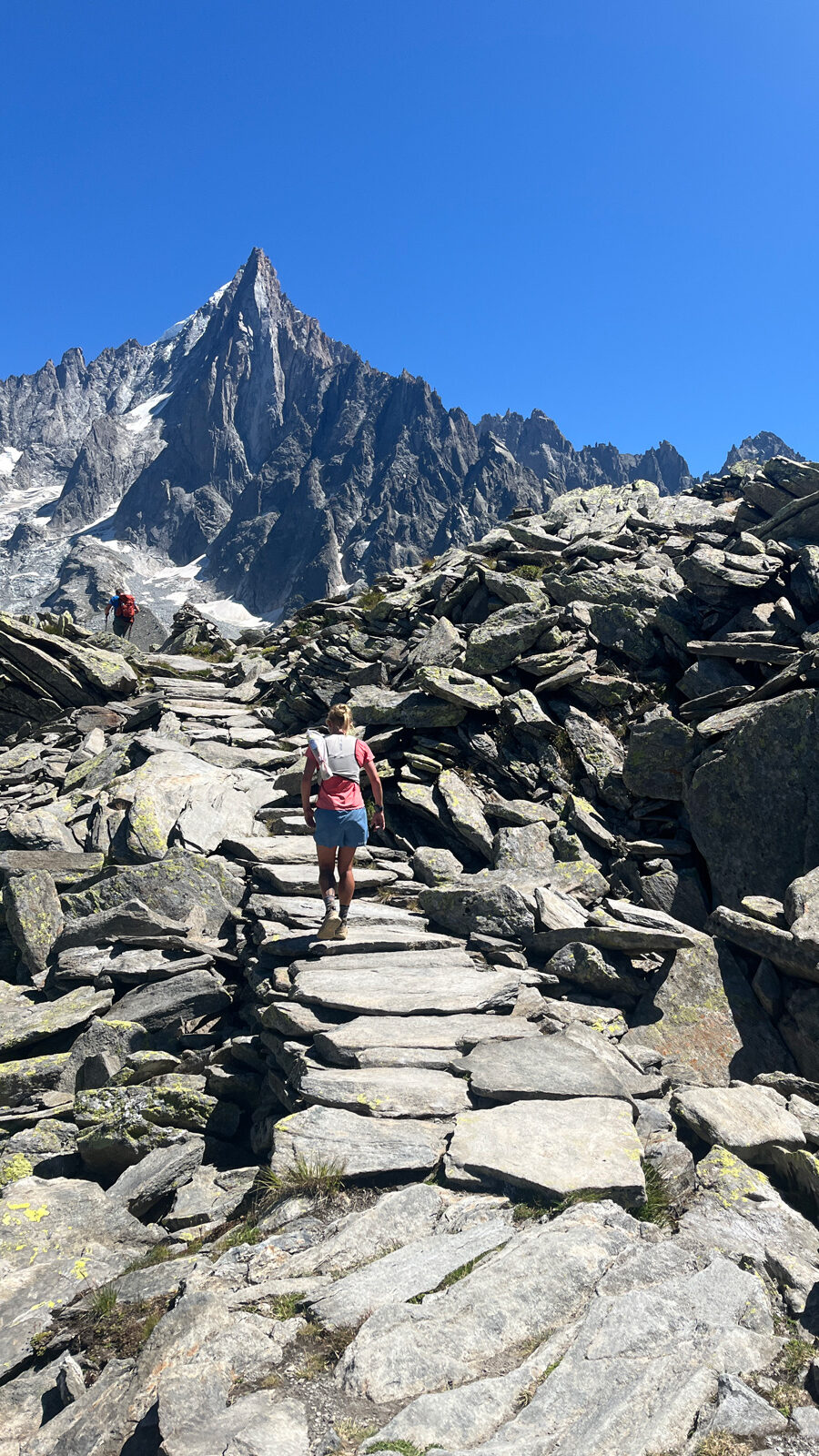

You can tell a lot about a runner by the races that excite them. When I ask Rachel if she wants to run the Barkley Marathons, she doesn’t hesitate: “Hell yeah, dog!” Same goes for the Hardrock 100. “Yeah, I would love to do Hardrock, obviously,” she says. “I think it would be a race that I would love to add, even more so than this one. Those are mountains I’m really familiar with, so I know how to determine what effort I should put on them. I have no idea how people gauge their effort here.”
This is Rachel’s first time in the Chamonix Valley and she admits it’s hard to be away from her friends and her partner back home, whom she FaceTimes daily. She’s also stunned by how steep the terrain is. As we leave the trail towards the Glacier de Blaitière, the surrounding rocks are loose, unstable, and fresh. It has the feeling of new ground, unsettled, which likely means it’s experiencing the same rockfall that much of the Alps and the Mont Blanc Massif are dealing with as the permafrost melts. We’re off trail to touch the glacier and fill our bottles. It’s somewhat unnerving, but we make it back to the Lac Bleu trail and back to the topic at hand.
“I know UTMB has a steep learning curve,” she says, “but I’m willing to give it a shot. Many, many people of all abilities that I deeply respect have run this race and really like it. So I think it’s something I should do, and I’m also in a position where I can give it a shot without going bankrupt.”
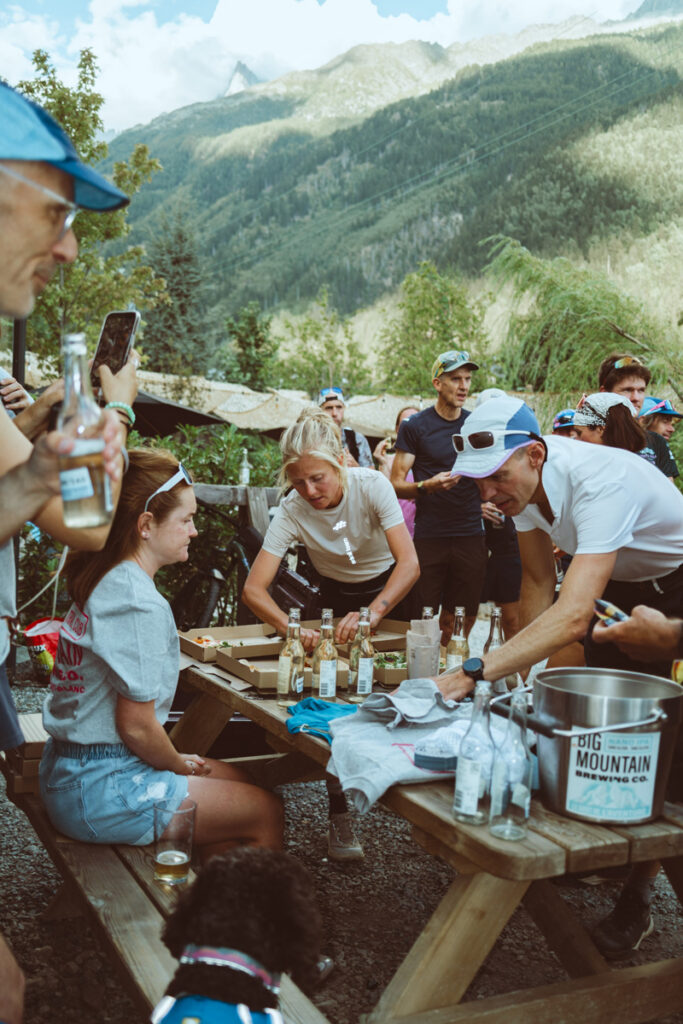
Our run takes us next to Mer de Glace, the famous ever-receding glacier tucked just around the corner. We descend back into Chamonix talking about ice cream the whole way down. We head straight for Rachel’s favorite stand and raise our recovery cones like a victory toast for a run well done.
But Rachel isn’t done. When I catch up with her weeks later, she sounds even more excited to race and has now covered the entire UTMB course nearly three times over. In her first week in the Alps she ran 141 miles with 41,264 feet of uphill. The second week had even more vert, with 137 miles and 45,407 feet of gain. And last week, she ran another 116 miles with 35,817 feet ascending.
Asked if she has a favorite stretch of the course, and she doesn’t hesitate. “The section essentially from Notre Dame de la Gorge all the way to Champex is fantastic,” she says. “I realize that’s half the course, but it’s such a good part! I’m getting excited to put it all together.”
She’s not expecting a “Queen of the Alps” coronation and she’s tight-lipped about her stretch goals, but she’s a competitor—and competitors don’t put in weeks like these, away from family, for anything less than everything.
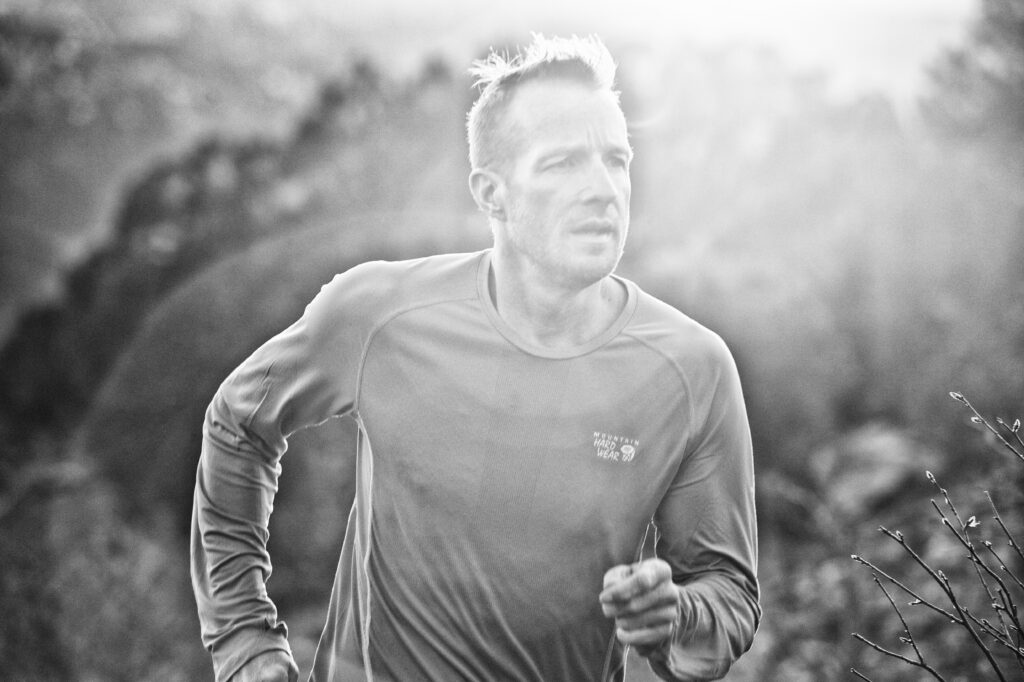
Matt Hart is a journalist and editor whose work has appeared in The New Yorker, The Atlantic, The New York Times, National Geographic, and Outside magazine, among others. His reporting has been selected for The Best American Sports Writing and optioned for film and television. He is the author of the 2020 book Win at All Costs. A longtime ultrarunner and ski mountaineer, Matt has called the Cascades, Wasatch, Front Range, and White Mountains home over the years.