
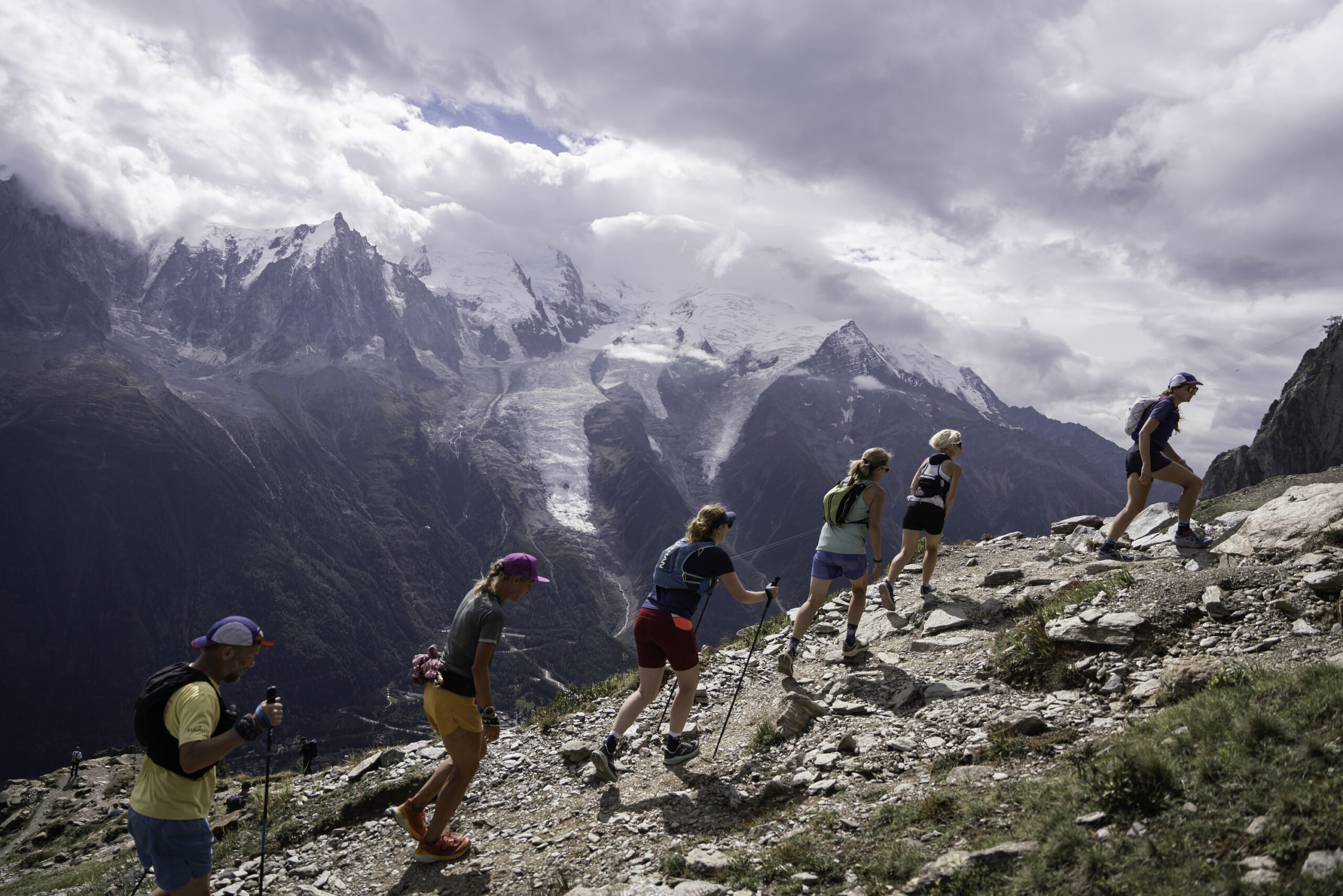
Eating Mountains for Breakfast: Nutrition for Running in the Alps
by Mimmi Kotka | Top photo: Toni Spasenoski
Big vistas, wild terrain, adventure – running in the Alps is special. Days tend to be long, sometimes very long, and back-to-back days of running or hiking are a staple. With all that volume and vertical gain and loss, the demands on your body are higher than what most of us are used to.
Leveraging some nutrition strategies is a great way to feel strong, last through long days, recover well, and enjoy your time in the mountains, not just on day one, but on the last day too. Whether you’re joining a Run the Alps tour or running the Alps on your own, these strategies can help keep you going.
Energy availability: don’t dig yourself into a hole
On a running trip, back-to-back running days, altitude, unpredictable weather, and long ascents and descents all add up. Your need for energy, especially carbohydrates, becomes significantly higher than normal.
If energy intake doesn’t keep up with energy output, fatigue accumulates fast, recovery suffers, and both performance and mood drop.
Make sure you’re eating enough, particularly carbohydrates. This is not the time to experiment with under-fueling. Practically, this means:
- Prioritize carbohydrates at meals and snacks.
- Eat regularly throughout the day.
- A substantial breakfast sets you up well to start the day.
- Adopt a mindset of fueling for the work ahead. Eat so that you can run today and tomorrow as well.
Snack early and often
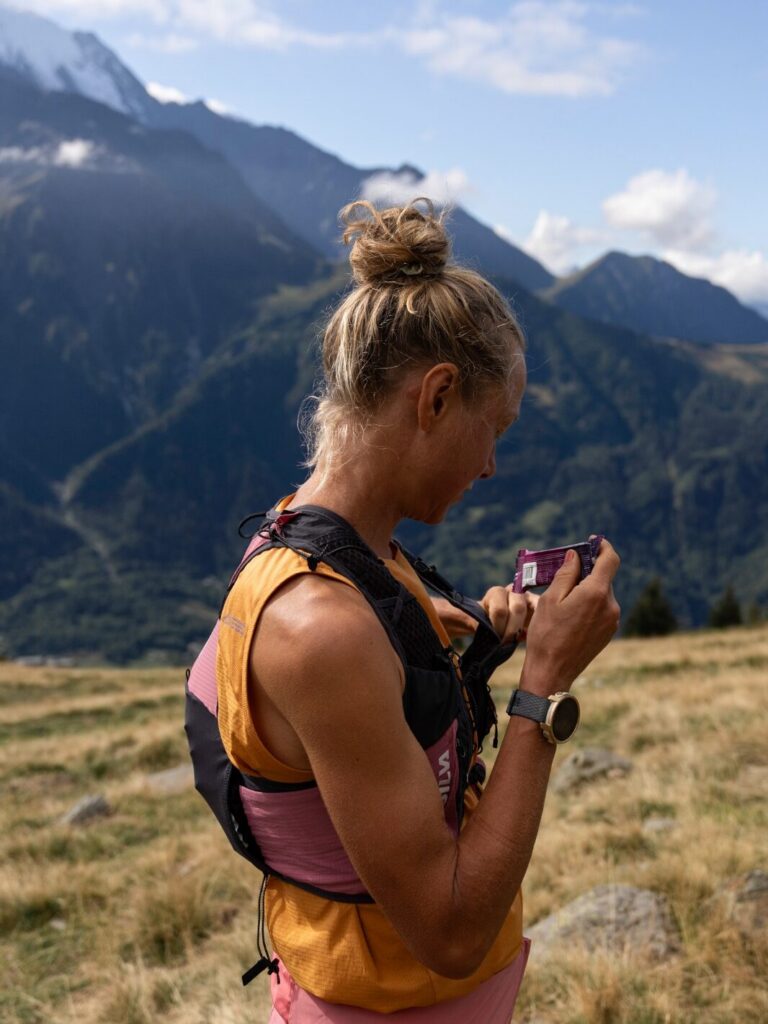
A big breakfast is great, but don’t rely on it to carry you through. The mountains are unpredictable, and output is high, so snacking should be your best friend. How to snack enough and why it matters:
- Start early and keep it consistent throughout the day.
- Bring more than you think you’ll need.
- Staying sharp in exposed and technical terrain matters. Bonking can be risky.
- Small, frequent carbohydrate-rich snacks, such as gels, bars, bread, candy, energy chews, help maintain blood sugar and spare glycogen stores.
- Aim for around 60 grams of carbohydrates per hour at an easy pace, and more if intensity is high.
Exposed environments mean more fluids
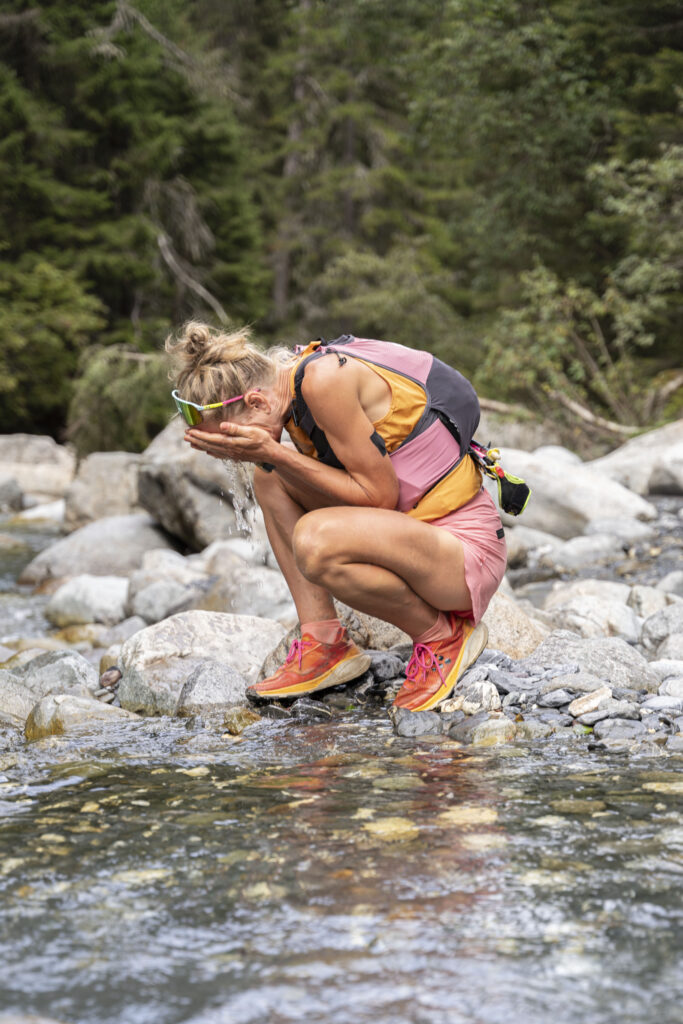
Running high in the mountains often means cold mornings, hot afternoons, wind, sun, and rapid weather changes. Add altitude, and hydration becomes critical.
Sweat rates can be deceptive in cool conditions, and altitude increases respiratory water losses, so you might not feel thirsty. While there are many wells and fountains in the Alps, many run dry during the summer months, and water quality in streams varies with runoff and location. If you don’t know the area, don’t assume water will be available, so:
- Drink enough for your needs (highly individual).
- Always pair fluids with sodium, especially on long days.
- Carry enough fluid, and plan for a secure refill along the way.
Protein for recovery: the descents will get you
The technical and steep terrain of the Alps, as beautiful as it is, is also brutal on the body. Long, sustained downhill running places a large eccentric load on the big leg muscles compared to flat running. This causes far greater muscle damage, meaning your body has some serious repair work to do.
Staying on top of your protein intake supports muscle repair:
- Include a good protein source at all main meals throughout the day.
- Aim to get protein soon after finishing your run.
- Before bed, a protein-rich evening snack supports muscle recovery without disturbing sleep, as a large meal might.
Embrace hut culture
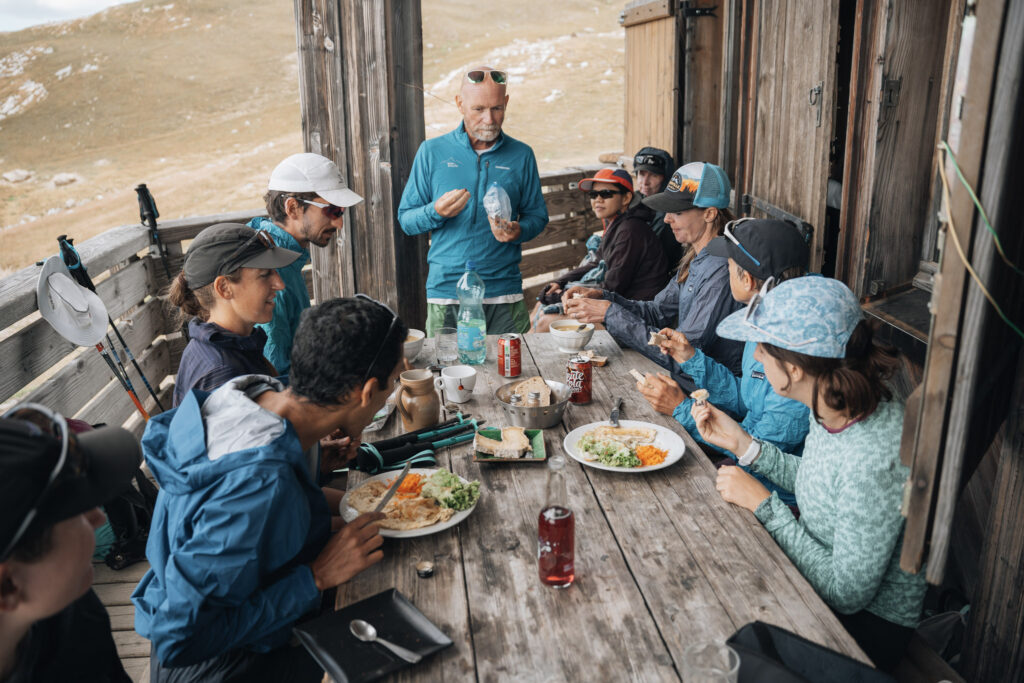
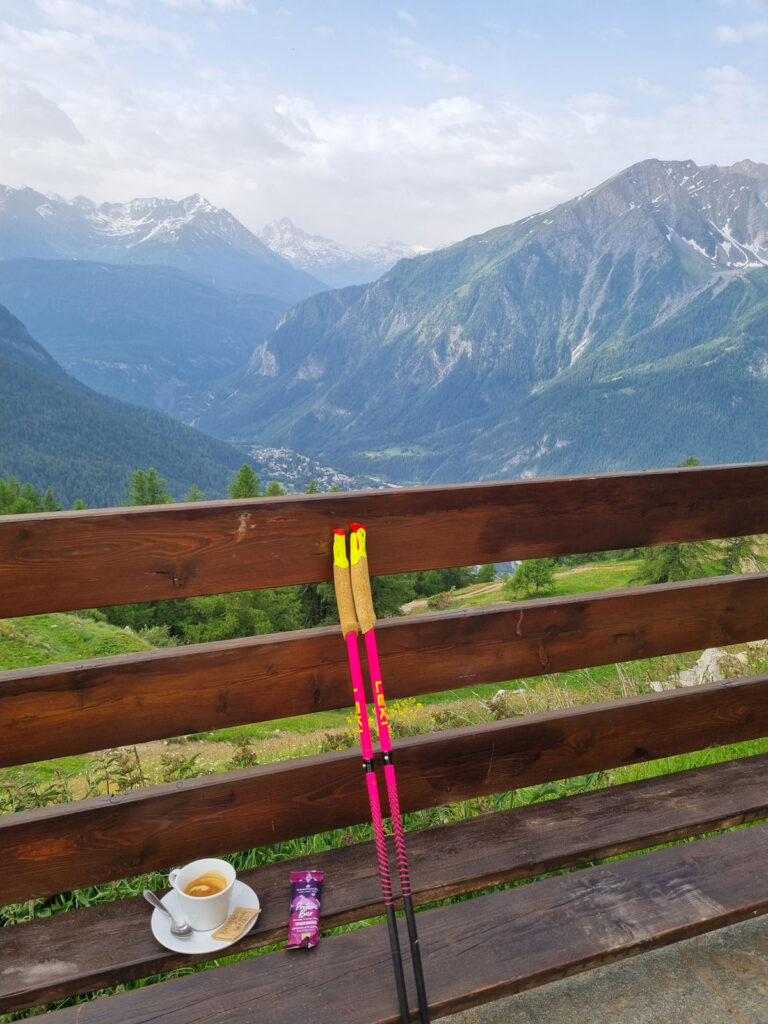
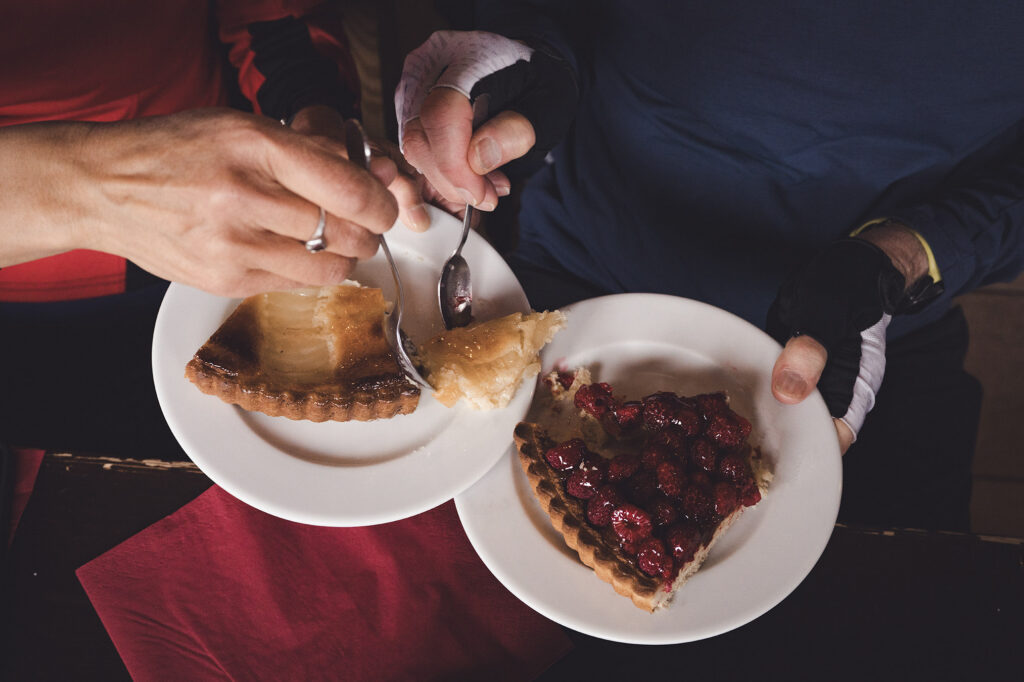
No matter how remote you think you’re going, there’s often a hut along the trail, serving excellent espresso, local cheese, cold cuts, and buttery pastries. Hut culture is a proud part of alpine mountain life, and from a nutrition perspective – I fully approve!
An espresso with extra sugar and a slice of homemade blueberry pie might not work for everyone, but if the pace is manageable and your stomach tolerates, it’s a fantastic way to fuel a long mountain day. If you’re more sensitive, a soda can work just as well. Fast carbohydrates and a mental reset go a long way. Things to keep in mind for huts:
- Bring cash; cards are not always accepted.
- You will always find drinks to buy, but fresh water to refill your bottle is not always available.
Make a plan
Before heading out, take a minute to think through the day:
- How long will you likely be out?
- How much vertical gain and loss is involved, and what’s the terrain like?
- Are there huts and water refills along the way? Are you counting on them, or treating them as a bonus?
So eat mountains for breakfast.
And lunch.
And maybe cake in the afternoon.
Oh, and don’t forget dessert at dinner.
Your legs will thank you.
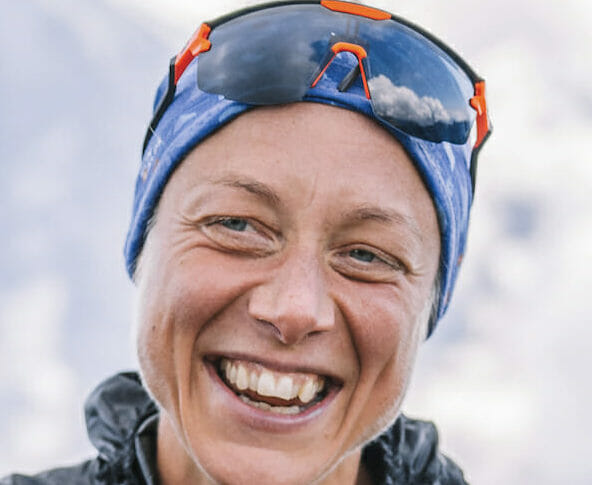
Mimmi Kotka: With over a decade of competing in ultra-distance trail running at the highest level, including wins at CCC, TDS, and MMB 90K, and a podium finish at UTMB, Mimmi knows the Chamonix mountains intimately.
Alongside her athletic career, Mimmi is an IOC-certified Sports Nutritionist specializing in endurance performance and high-level health optimization. With nearly two decades of experience working as a nutritionist, she brings a rare perspective that bridges scientific evidence with real-world application. Her approach to nutrition is rooted in research, years of hands-on practice, and tested in the mountains she calls home.