
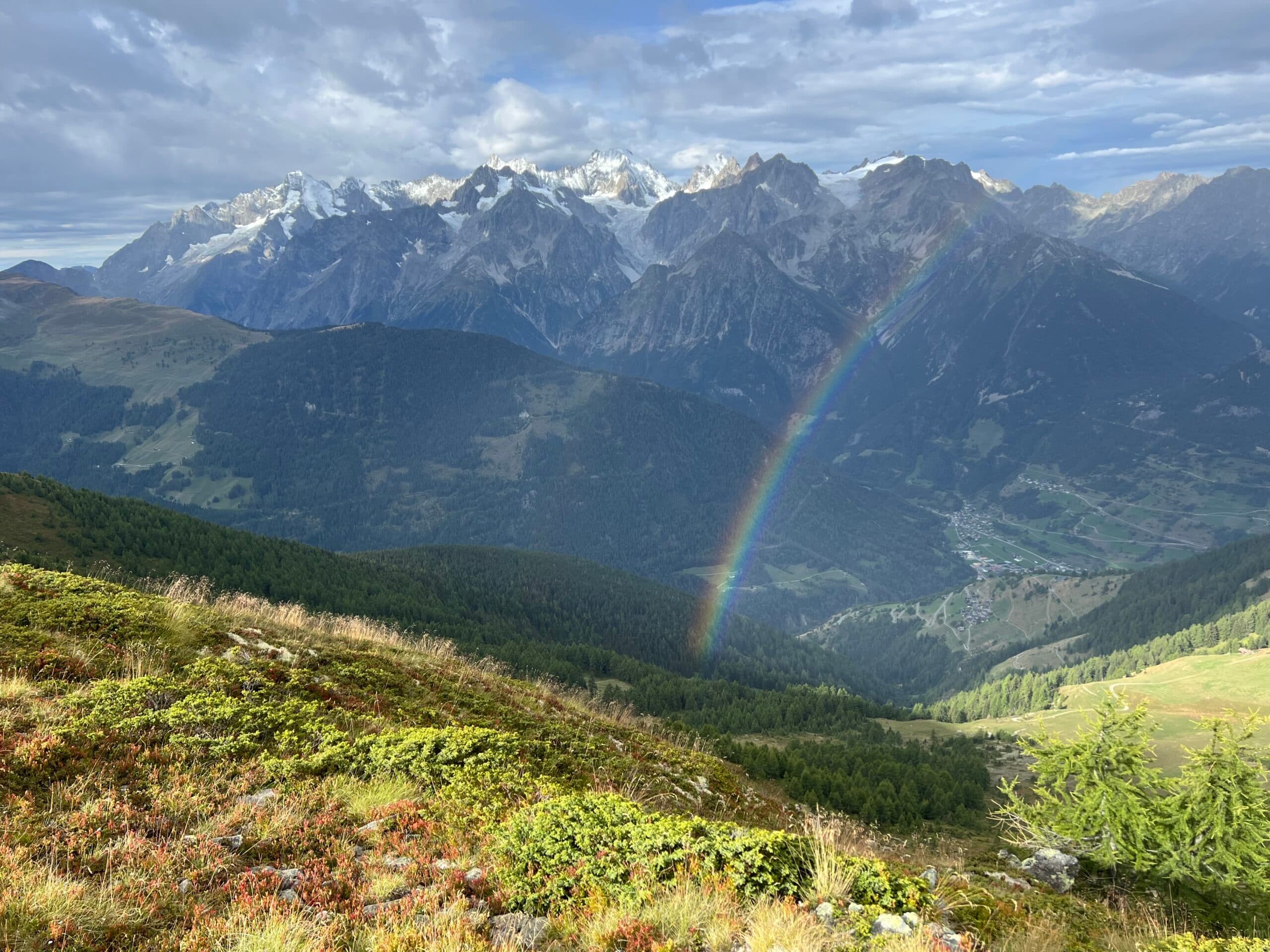
The Story of Paul & Me: Reflections on Swiss Peaks 380k and what it takes to tackle 200+ mile races in the Alps
Background
I first met Paul Holmes on Orcas Island, WA when I was volunteering for a 100-mile race there in January 2019. Paul lives on the island, and had come to cheer on a friend. Because the race course is a loop, he kept returning to our aid station over the course of the day (and night), so we spent many hours together. He’s from New Zealand, and has a super friendly, easy-going demeanor – we quickly hit it off.
Fast forward nearly 3 years. Paul had been through Portland once since we met and joined a group run I was leading, but besides that we hadn’t kept in touch. Then, a year or so later, towards the end of 2021, totally out of the blue, I got an email from him asking if I knew folks who guided in Patagonia. I’d been there twice myself and could speak decent Spanish, so I offered to take him. He agreed and I started planning.
Our 11-day one-on-one trip could have gone badly given that we barely knew each other, but it ended up being the start of a great relationship. We warmed up exploring trails in Torres del Paine, then traveled to Isla Navarino and did the 50k Los Dientes de Navarino loop, dubbed the southernmost trail on earth, in a day.
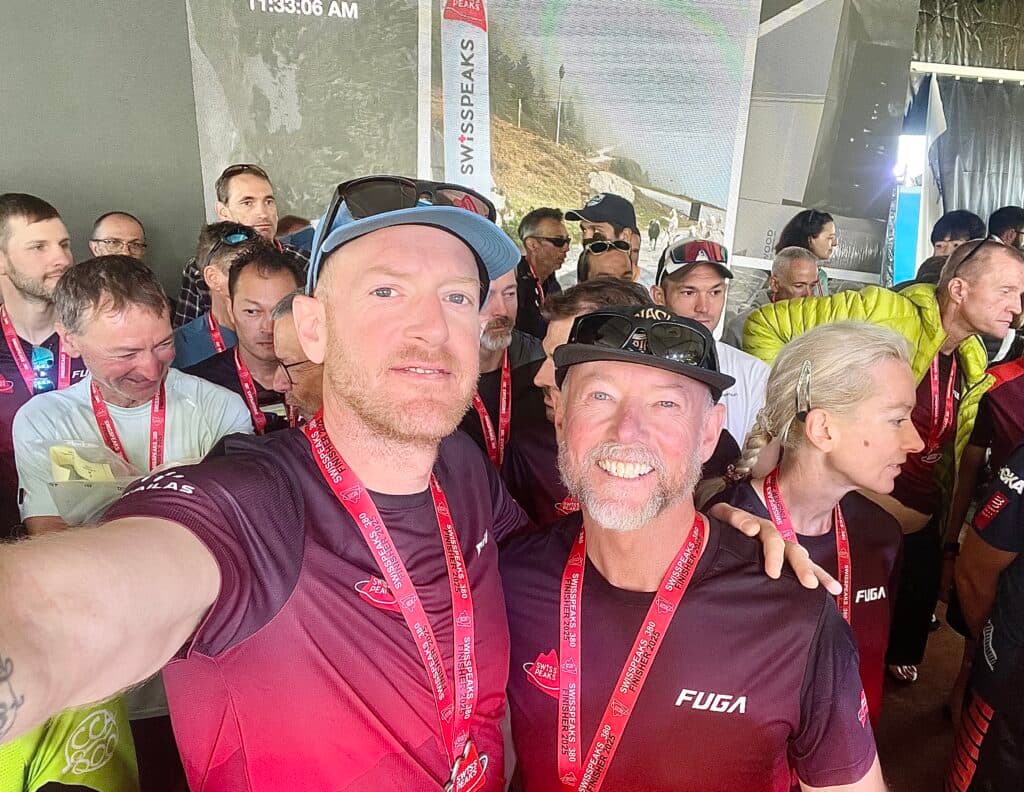
The friendship and bond that emerged from that trip kicked off a multi-year string of adventures from Patagonia in 2022 to Swiss Peaks 380k in 2025.
Training
In 2024 I completed Tor des Giants (wrote about it here), and afterwards raved to Paul about what an incredibly powerful and rewarding experience it had been. I was eager to keep tackling these monstrously difficult multi-day races; so I set my sights on Swiss Peaks for the following year and told Paul that he should sign up with me. At that point Paul had never done a race over 50k in length. As a coach, I wouldn’t normally suggest that someone jump from 50k to 380k, of course, but I knew firsthand from our many long, difficult non-race adventures together that he had the mental and physical strength and skills to give it a reasonable shot. He took the bait, and my offer to coach him over the 8 months leading up, so we registered.
In training myself for personal goals over the years, I’ve often taken the approach of simply spending as much time in the mountains as possible – getting out most weekends with some local running and training in between. I like this approach because it focuses on what I love most – adventuring in wild, beautiful places – and at the end of “training” I’ve amassed a solid list of worthy objectives in their own right. The downside is that a potential lack of consistent day-to-day training, despite relatively frequent days in the mountains, can leave you short of your full fitness potential. Knowing this firsthand, I crafted a training plan for Paul that would be the best of both worlds: lots of mountain time (running, hiking, scrambling, climbing) on the weekends, supplemented with plenty of running and cross training, plus lots of sauna and recovery time, during the weekdays.
Mountain travel is a language, and to become fluent in it you must study and speak in as many dialects as possible. To know mountains deeply you don’t just move through them at one pace – you explore and learn them in a variety of paces to see different angles, have different experiences, immerse yourself and absorb all you can. Sometimes you walk, sometimes you run, sometimes you backpack and sleep out overnight, sometimes you scramble, sometimes you bushwhack, sometimes you climb. Other times you just sit, look, and listen. The better you speak the language of being in mountains, the more familiar and comfortable you become there, and that is the ultimate goal – to be at ease in wild spaces, reacting calmly no matter what elements or challenges arise.
The more I spend time in the Alps, the more I realize just how fluently the locals can speak the language of being in mountains. They appear effortless, in total comfort no matter the terrain, like they’ve been traversing high peaks since childhood, which many of them likely have. It’s a beautiful thing to witness that level of mastery.
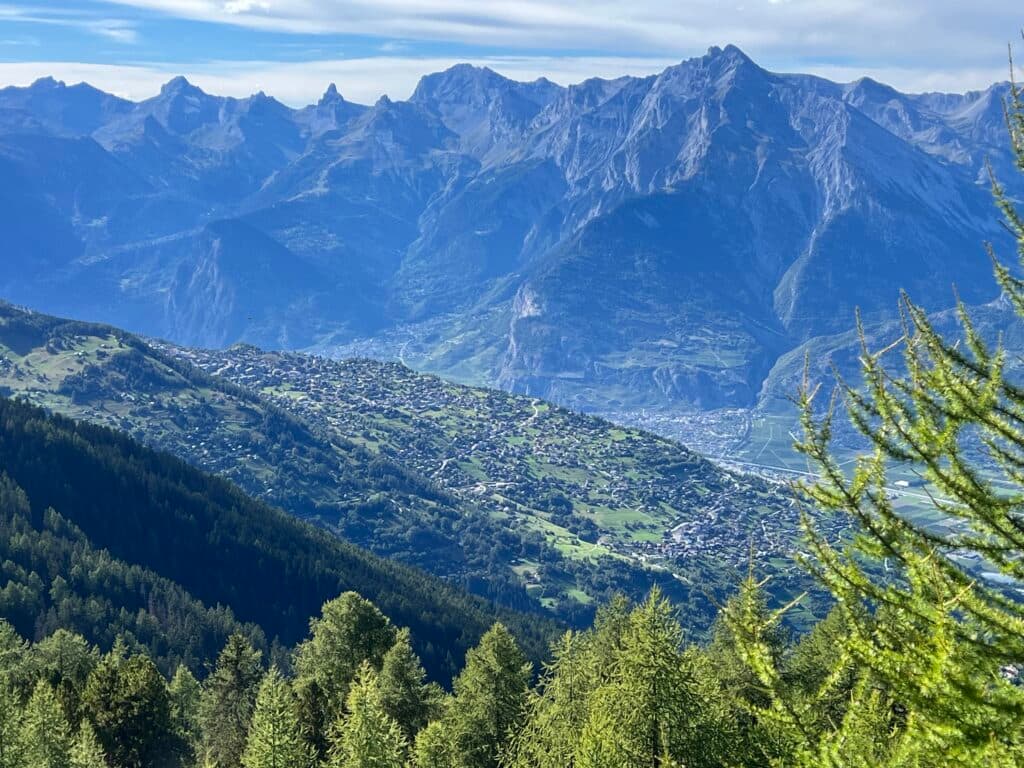
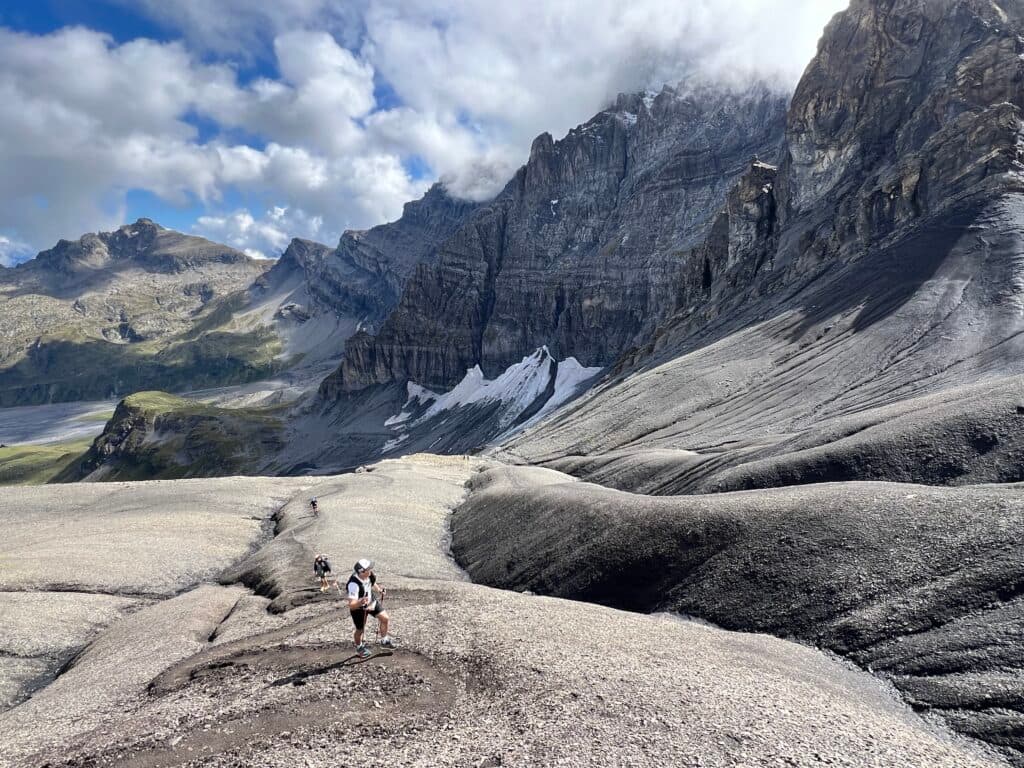
Paul and I crammed an impressive amount of studying together in the year leading up to Swiss Peaks. We climbed summits, crossed glaciers, and scrambled ridges, prepping our mental game for the looming goal ahead of us. I knew what to expect in a 200-mile endeavor; Paul, on the other hand, still had no way of fully knowing what he had gotten himself into. My advantage of having done the distance and difficulty before didn’t exactly benefit me as I’d hoped, but we’ll get to that later.
Mindset
Besides the difference in our previous race experience going into Swiss Peaks, Paul and I arrived at the start line in different mental states as well.
Paul was in an especially good place – he’d been having wonderful adventures all summer, and was feeling strong and healthy as ever. His son had just gotten married at Paul’s property on Orcas Island, and he’d successfully orchestrated a large, joyous celebration. He’d also just gotten into an exciting new relationship of his own, feeling the love and thrill that goes along with that. Plus, he was in the stunning Swiss Alps about to embark on a big, new, adventure on his very first time in Europe.
Paul had a beginner’s mind – fresh and free from the baggage of past pain, from preconceived notions of what the race would be, ready for whatever the experience brought his way. He didn’t know what he was getting himself into and was in the best place he could be: strong, well-trained and eager with no expectations, his mind a blank slate to write the story of his journey through the Alps.
I, on the other hand, had just gotten upsetting news of two very close family members with health issues – one of them would be in surgery while I was mid-race. Needless to say, I was upset and not feeling the usual positivity and excitement that accompanies the days leading up to a big event. Was it reasonable for me to electively push my body and mind to such extremes on dangerous terrain, completely sleep deprived, in all sorts of weather, when my loved ones were dealing with these health issues in which they were given no choice? The stakes felt higher given these new circumstances.
The race started in the village of Oberwald at the head of the Rhône valley. At noon we were off, climbing into the mountains, trying to find the rhythm of up and down that would carry us for the next 4-6 days. Shortly after setting off, all the less than desirable memories of Tor des Giants came rushing back to me. I was immediately reminded of the deep, soul-searching discomfort that’s necessary to finish a race of this distance and difficulty. I’d been motivated and driven onward by the powerful positive effects I’d felt finishing Tor, and, of course as we so often do, selectively repressed the most painful, unpleasant memories. But now, the questions and doubt came flooding back: Why, oh why, was I doing this to myself? Would I be able to get it done? I thought I wanted to go this big again the year after Tor, but maybe it was too soon, maybe the well hadn’t refilled enough to drain it so completely once more? Is my head really in it this time? Is my heart?
Why
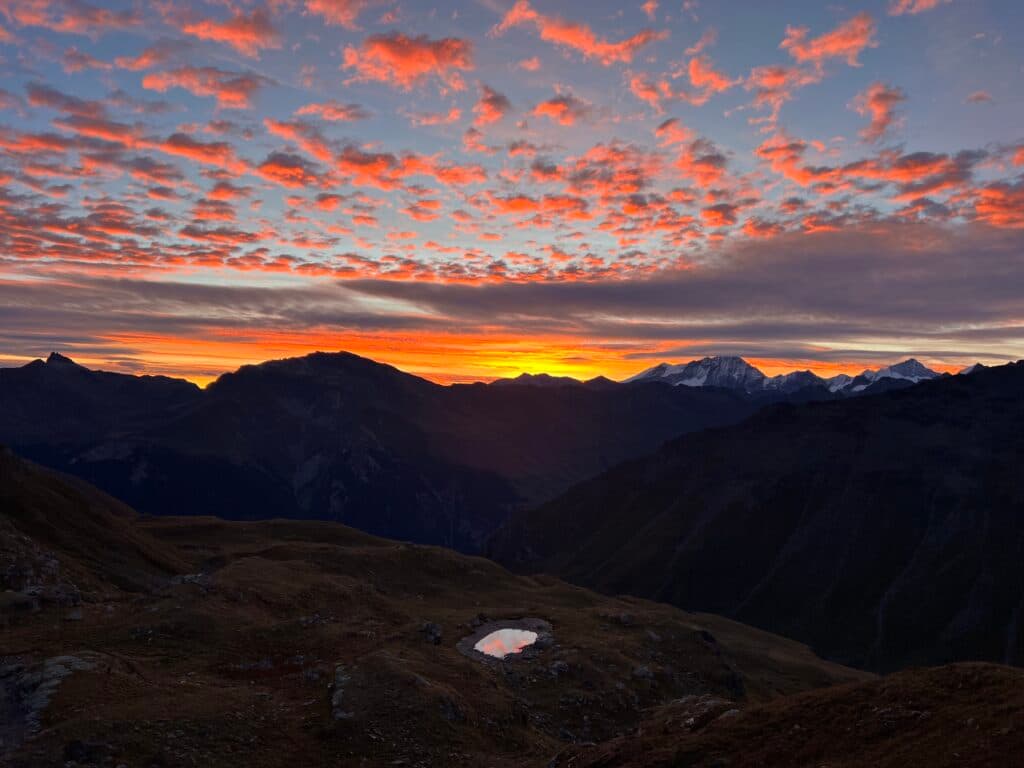
When things get really hard and the mind chatter grows loud, all you have is your Why to keep you going. Why are you doing this? Why does this matter to you? In the darkest, lowest moments, when you realize that comparison and placement and ego are ultimately meaningless, that no one really cares about your accomplishments (in the best, most freeing way possible), can you find your reason to go on? When you realize that the people who love you will continue to do so whether you finish your race or not, what keeps you moving onward?
Paul is faster than me on the uphills, and as I’d expected, he quickly disappeared from view as we began climbing. I had urged him not to go out too hard, and wondered if I’d see him again. Spoiler alert, I did not. While I had the great satisfaction of being his coach, and was thrilled to see him performing so well, it was also a bit hard on the ego. I was struggling and he was excelling – his tracker on the race website pulling further and further away from me as the hours passed. I felt annoyed and defeated, frustrated that I wasn’t feeling great mentally and physically. These emotions swirled around me as I forced myself on, up and down, and up and down the looming passes.
I came close to dropping at Thyon, about midway through the race, but Josh, my one-man crew, managed to coax me onward. He went through the different lines of reasoning to try to keep me going. He said he had a friend who used this rule: if you drop from the race, but are still healthy enough to go to the finish line to watch other folks finish, then you should have pushed further, dug deeper.
As a coach, I often don’t agree with statements like these. After all, there are many reasonable reasons to drop that aren’t serious injuries. Dropping out of a race is ok, because it’s your choice and you are the decision maker. You chose to sign up and you can choose to quit. No one else’s opinions or feelings about it ultimately matter.
While I knew that it was ok to not finish, and I encourage others to allow themselves that grace, I also knew that there would be a nagging voice, that pesky, worming thought in the back of my head wishing I had kept going. It’s so incredibly simple: either yes or no, stop or go, but it’s never ever easy. It’s not fancy or complicated; you keep moving forward or you pull the plug. When things get hard, will you find the reasons to continue, or listen to the reasons not to?
Curiosity
Artist Georgia O’Keeffe said: “I think it’s so foolish for people to want to be happy. Happy is so momentary—you’re happy for an instant and then you start thinking again. Interest is the most important thing in life; happiness is temporary, but interest is continuous.”
Interest – the state of being curious and engaged – is what got me, Paul, and everyone else to the start line of Swiss Peaks in the first place. Every one of us chose to embark on this particular journey because we were interested to find out what is out there, what is inside us, what is on the other side of struggle and discomfort and perceived limitations. Endurance athletes are explorers, endeavoring into the interior and exterior arenas of this existence.
I was curious to find out what the end of the journey held, so I didn’t drop. My interest in finishing what I’d started outweighed what would ultimately be a temporary relief from dropping out.

How do you get through 200+ miles?
So how do you finish races like Tor des Geants and Swiss Peaks?
You practice your language skills over months and years, delve into your study, speak in all the tongues; go slow, go fast, go short, go long.
Hope that you’re in a good mental place and know your Why.
If/when you waver, reground yourself in staying interested and engaged. Choose curiosity over comfort. Your body and mind might rebel and refuse, but let the big picture override the ultimately fleeting anguish.
Stay engaged and find out what the end of the journey holds, no matter how badly you may want to quit. In the end, you’ll be thankful that you did.
Post-race
It’s been nearly 2.5 months since Paul and I finished Swiss Peaks. He and his girlfriend Anna came down to Portland recently for a visit, and together we all climbed Mt St. Helens in fun, early season conditions.
It was great to see him, as always, especially looking healthy and happy. I could feel a deeper change in him that went beyond that – a process that started when we began adventuring together in 2022, and accelerated into overdrive after this past summer and our trip to the Alps. Something subtle, but distinct, noticeable in the way he talks, and moves through mountains, the way he carries himself in the world. Maybe I can see it because it’s a change that’s occurred within myself over the years.
The change comes from truly embracing, or more importantly living, the belief that anything is possible. When you’ve accomplished something that feels so very impossible, when you’ve traveled numbers of miles and amounts of elevation change that our minds can’t compute, you come out the other side a different person in a different world. You can now see with fresh eyes – and a wholly new level of clarity and confidence – that your potential is far beyond what you’ve been conditioned to believe, and the world around you is ever-ripe for powerful self-discovery and adventure.
The question then is: do you have the curiosity to go out and explore it?
Join Willie McBride on the Tour du Mont-Blanc in 2026
We are looking forward to welcoming Willie as a Guest Runner in 2026! Join us for a rustic edition of the Tour du Mont-Blanc, mixing huts with hotels over the course of 170km through France, Italy and Switzerland.
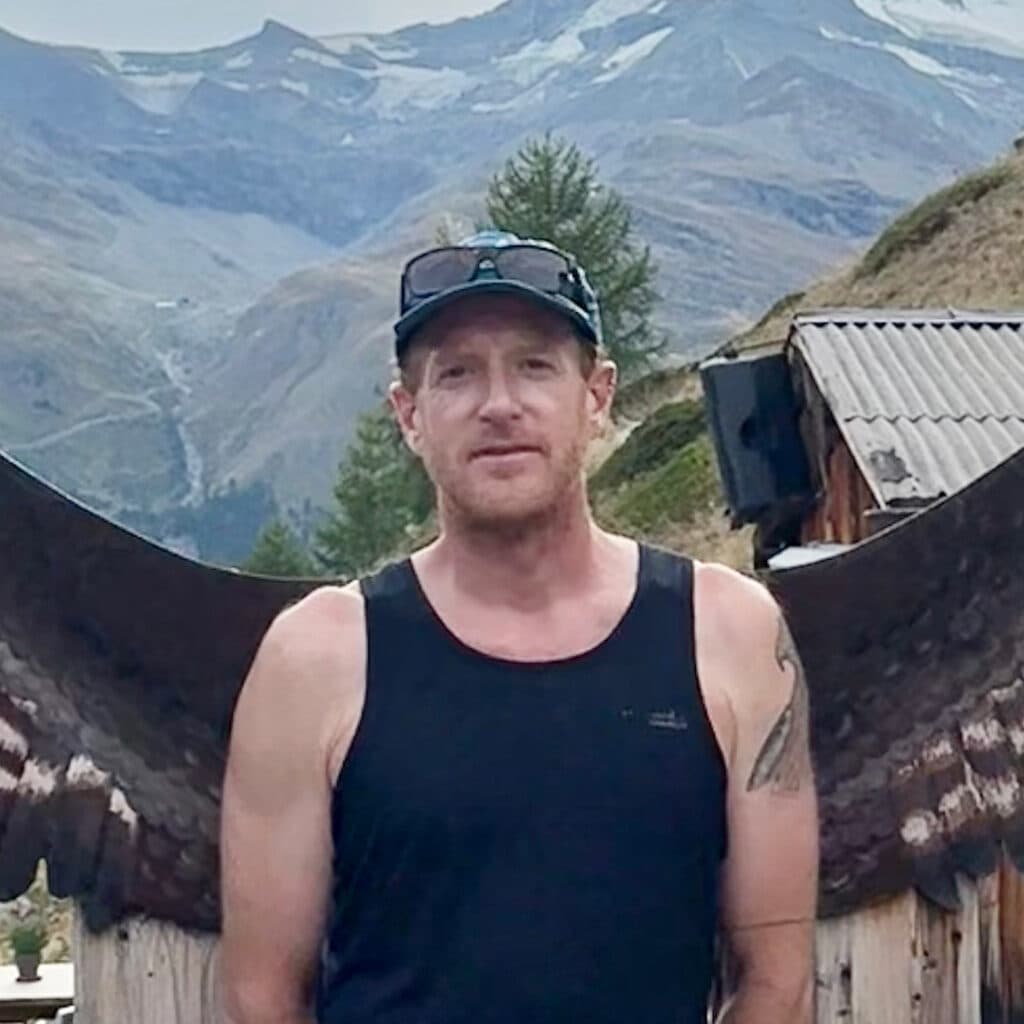
Willie McBride is an endurance athlete/adventurer, coach, guide, and business owner (The Wellness Movement For All) based in Portland, Oregon. He’s been fortunate to climb mountains and run trails around the world, having many powerful and awe-inspiring adventures along the way. His greatest passion of all though is sharing his enthusiasm for movement and the outdoors with others, and trying to help people live well and feel better in both mind and body.