
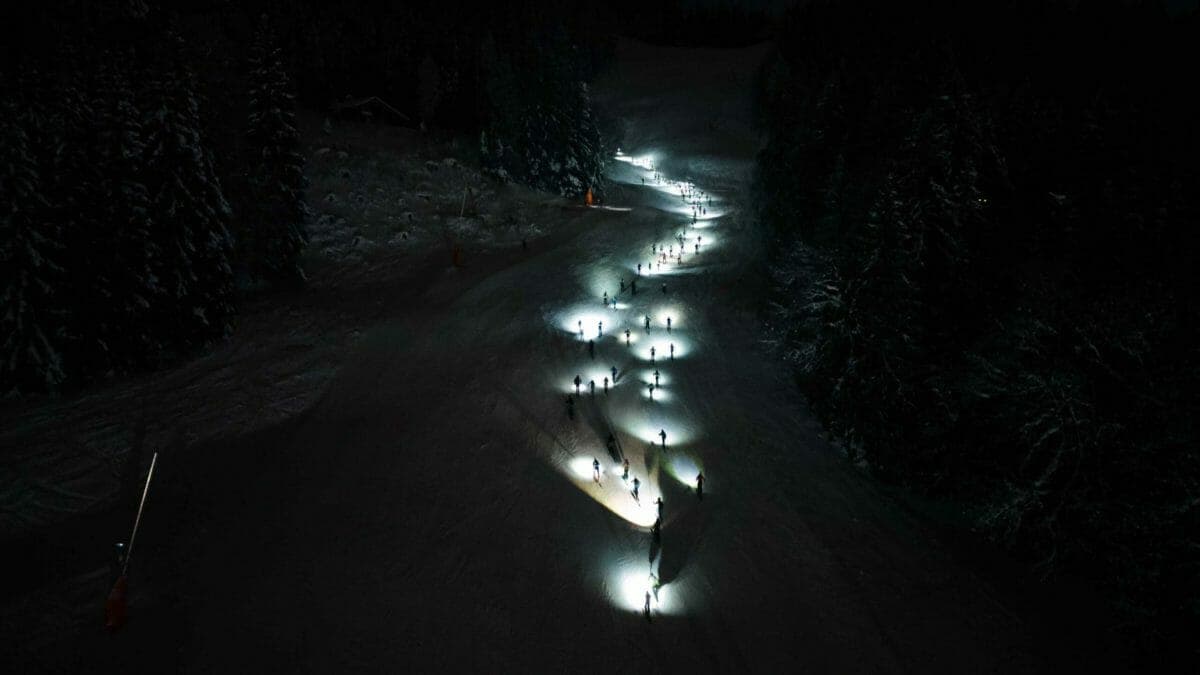
Vertical Skimo Races in the Alps
Original post Feb 2023 by Grace Staberg | Updated 2026 by Niko Viglione
Vertical races offer the perfect introduction to skimo racing. They are also a highly effective way to build base fitness for trail running, backcountry skiing, and other endurance pursuits.
This category of skimo racing features a single, continuous ascent, which eliminates transitions – the technical process of applying or removing climbing skins. It also removes the pressure and risk of navigating steep descents on ultralight, skinny, skimo skis. This makes vertical races quite accessible, even for skiing novices. As a result, the field is often composed of competitors with a variety of fitness levels. However, participants should still be comfortable ascending on an icy slope and skiing downhill safely.
Many ski resorts that are friendly to uphill travel offer a vertical race during the season, with some resorts even offering a weekly race series throughout the winter. In the Alps, more often than not, vertical skimo races take place in the evenings and are accompanied by refreshments or dinner afterwards. Information about these races can often be found at local sports clubs, or on the events page of a resort’s website.
We’ve listed a few of our favorite races, below. Before you dive into the list, however, here are a few tips for getting started!
Vertical Racing Tips: Start Here
- Medical Certificates
Registration for many competitions in the Alps, including skimo races, require a medical certificate clearing you for competition. Find out more about medical certificates for racing in the Alps, why you need them, and how to get them in this post.
- Mandatory Gear
Check the race website for a mandatory gear list. For races at night, a headlamp is usually required and other mandatory gear may include a light jacket, helmet, or other piece of specialized equipment necessary for your safety like crampons, harness, or an ice axe.
- A Change of Warm Clothing
Some races allow you to send a bag up to the race finish, or to the refreshment area. If that’s the case, be sure to send up a dry shirt and warm puffy, at least. A back up headlamp and a liter of tea isn’t a bad idea, either.
- Arrive Early
If you can, arrive early so you have plenty of time to figure out where the race starts, understand the process after the race, and not feel frantic during the race start.
- Post-Race Meal
Some events provide deals at local restaurants afterwards as well—a great opportunity to sample the local cuisine. If you are meeting somewhere else for post-race refreshments, stick a few euros in your pocket for that bonus cup of hot chocolate!
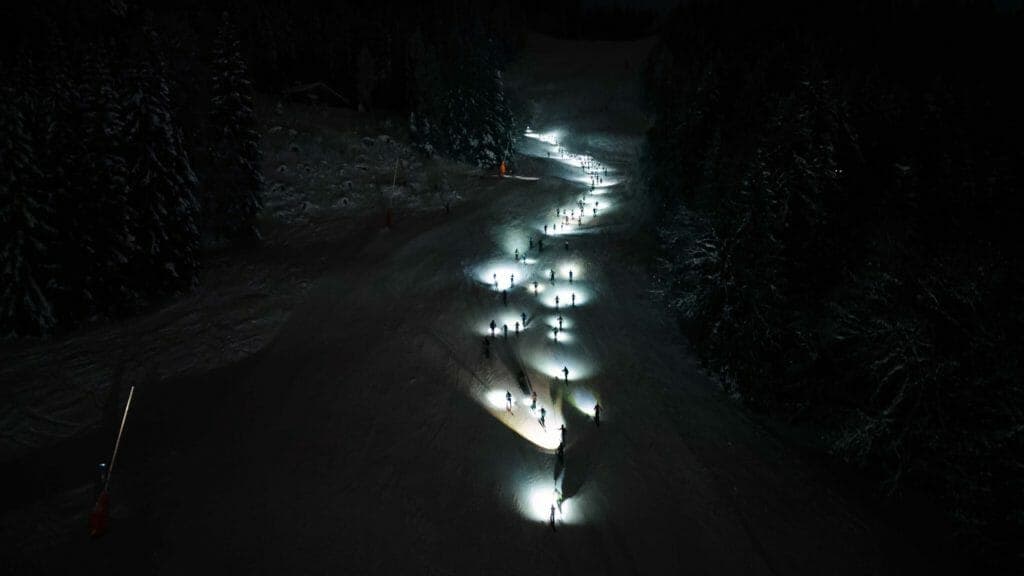
Ready? Great! If you’re living in the Alps, or just passing through on vacation, here’s that list of vertical race options to help you get started!
Vertical Skimo Races: A Brief Sampler
Race: Inalpe Dynafit 2.0
Location: Nendaz, Switzerland
Stats: 3.75km and 820m+
The Inalpe Dynafit 2.0 course happens in January, at night, around 19h. The inaugural edition of the race, in 2022, drew 250 participants. The course climbs the Tracouet track on the Jean-Pierre side of the Nendaz ski resort, to the summit of Tracouet.
In addition to the popular and elite categories, a “company/society” category allows teams to compete against each other; the three best times are counted. The registration fee of CHF 40 includes a souvenir as well as dinner at the Tracouet restaurant. The race encourages the practice of skimo among youth by offering free registration to those under 18.
There is free lift access to the finish line for spectators.
Race: La Diagonale du Mont-Joly
Location: Saint Gervais, France
Stats: 4km and 1000m+
One of the local Chamonix favorites, La Diagonale du Mont-Joly is a winter-time vertical kilometer which climbs from the base of the Chattrix chairlift to the top of the télésiège du l’épaule over its 4km length. There is also a Mini DMJ which climbs 450m+ to the halfway point of the race.
The race starts at 18h and there is a hot meal available for racers and spectators after the finish of the course. The DMJ draws competitive racers, recreational skiers and athletes of all ages for a fun night of skiing under the stars.
Race: La Verte à l’Envers
Location: Chamonix, France
Stats: 3.5km and 870m+
A Chamonix Valley classic, La Verte à l’Envers is held annually in late January, featuring a nighttime start. Tracing the classic Kandahar World Cup piste in reverse, the race ascends “La Verte.” It’s a striking contrast to the professional downhill circuit; instead of high-speed descents, the track becomes a steady, uphill test of endurance.
The event offers three ways to find your limits. You can go it alone in the Solo category or sign up for the Duo which allows you to bring a friend along to share in the suffering (and the glory) in equal measure. For those looking for a slightly more compact challenge, the Petite Verte offers a shorter course that still packs a punch with its 550-meter vertical climb.
Race: L’Obs by Night
Location: Beauvezer, France
Stats: 3.5km and 776m+
Hosted by the local Fédération Française de la Montagne et de l’Escalade (FFME), L’Obs by Night has been a Val d’Allos staple for nearly a decade. The event offers participants the chance to compete individually or in pairs. To ensure everyone is in place for the on-site fireworks display, strict cutoff times are maintained throughout the race.
All racers depart promptly at 18:30 and have a maximum of two hours to complete the ascent. For those looking to celebrate, a post-race package is available by reservation which includes a downhill shuttle ride and a full meal at local restaurant, Le Parapente. The menu features a selection of alpine specialties, including pot-au-feu and boîte chaude, followed by dessert and coffee.
Race: Millet Ski Touring Courchevel
Location: Courchevel, France
Stats: 3.2km and 500m+
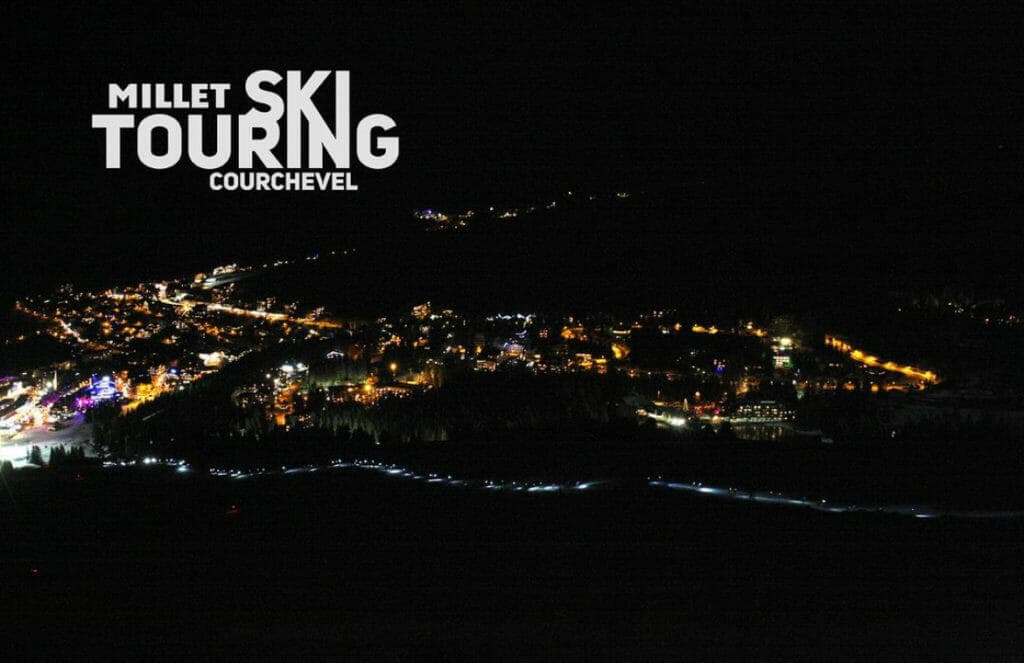
The Millet Ski Touring series in Courchevel is one of the most popular in the Alps, in part because it takes place on the same course, every Wednesday, every winter, starting in late December. This allows racers to return to a course they know well and become comfortable on, and it allows them to compare their finishing times week-to-week and year-to-year.
The atmosphere at this weekly race series is electric, with thousands of skiers completing the course each winter and spectators coming out to cheer each Wednesday night from late December to mid-March. It is a time trial start format, with the first competitor starting at 18h and racers departing every 20 seconds.
Part of what makes Courchevel so special is that it draws the youngest racers, racers who’ve been skiing for decades, and families, all alongside competitors with their eyes on the record and the large cash and gear prizes throughout the season. The final edition, in late-February, is typically costume themed and includes a concert at the finish line. Registration can be done online or at the start in Courchevel Le Praz the hour before the race.
Race: Montée de la Foilleuse
Location: Morgins, Switzerland, Région Dents du Midi
Stats: 2.7km and 525m+
The Montée de la Foilleuse is free and open to both snowshoers and skiers and occurs every Friday evening throughout winter. Much like the famous series in Courchevel, the event draws a diverse group of elite athletes and recreational skiers alike. The ascent starts in the evening and takes place on a lit course, though headlamps are still required.
The route begins in Morgins and ascends to the La Foilleuse Restaurant at 1814 meters. In Switzerland, where the Patrouille des Glaciers is a revered race, many racers flock to vertical races as training throughout the season and turnout is high. For those hoping to purchase dinner afterward, there are two menus offered at the conveniently located finish line restaurant.
Race: Schwarzsee Vertical
Location: Near Fribourg, Switzerland
Stats: 2.8km and 450m+
The course from the Riggisalp valley station to the Berghaus Riggisalp is marked, groomed and partially illuminated as it occurs at 18h. The competition course is only open on race day and is a popular event with 175 participants in 2023.
There are categories for race, recreation and snowshoeing. Although the event follows a marked and controlled course, full avalanche safety equipment—including a beacon, shovel, and probe—is strictly required. Both the start and finish lines are spectator-friendly, and the summit restaurant remains open until 21h, welcoming racers and fans alike to celebrate.

More Uphill Events
The races above are only a small host of the copious events put on across the Alps. Other local races in the Alps include the Trace Des Grandes Vertical in Chamonix, France; the Belier Blanc in La Clusaz, France; the Vertica Louron in Val Louron, France; the Montée Givrée d’Orcières in Orcières-Merlette; the Assaut du Haut Fleury in Praz de Lys Sommand, France; and the Defi du CMSAB in Areches-Beaufort, France.
The Fédération Française de la Montagne et de l’Escalade (FFME) also sanctions numerous regional events across France, managed by dedicated local chapters. These races are usually open to the public but draw stiff competition—so bring your lightest skis and a strong set of lungs. Chamonix’s local chapter hosts their own website with a list of events around the region. Look for the tag “VR” or “Vertical” next to an event to find the uphill only races.
Wherever you may be in the Alps, it is likely that the local sports club has an opportunity for uphill enthusiasts to share in the “suffering” of racing uphill together!
Why Trail Runners Skimo
Want to learn more about getting started in skimo, and why it’s a popular winter training for trail runners? Pro skimo racer Grace Staberg wrote a blog about that – Skimo for Trail Runners: A Brief Primer.
