
Allez, Allez
By Max Wilson | Photos: Max Wilson
Max Wilson‘s “Allez, Allez” is one of three stories selected as runners-up in the first Run the Alps Writers Residency Contest in partnership with Like the Wind magazine. Read the winning story, “Je Est un Autre” by Haley Littleton here. Stories from the remaining runners-up still to come!
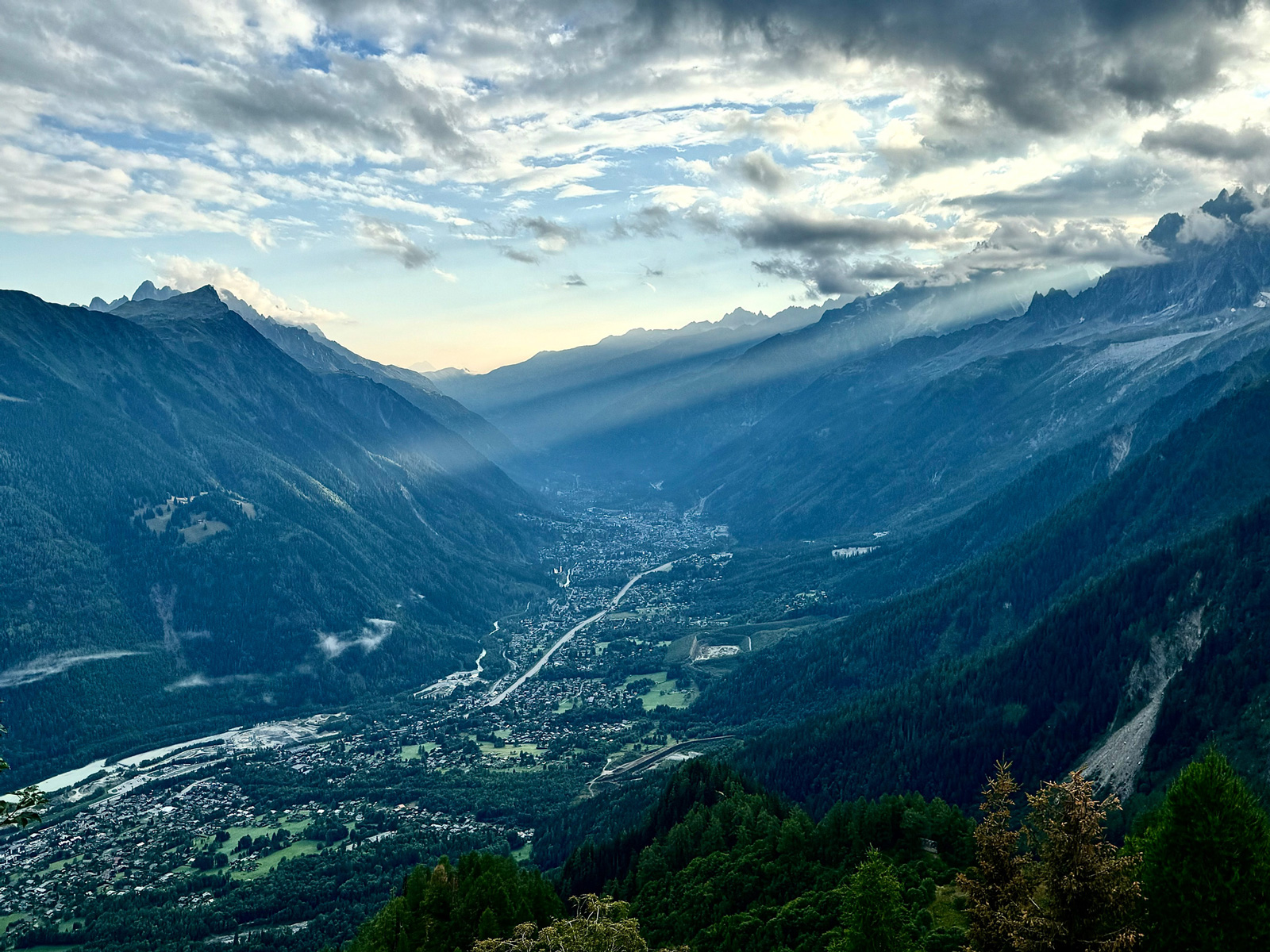
What is it like to run the UTMB® OCC? On face value, this is a yawner. It’s no different from any other ultramarathon trail race: a bunch of people, who may (or may not) be well-adjusted, assemble in an aesthetically beautiful location, wear colorful clothing, pin on a bib, and move as they can through terrain. However, at the UTMB finals, held the final week of August in Chamonix, France, this occurs on a logarithmically larger scale. Whatever one thinks about the commercial impact of trail running, there is, nonetheless, a well intentioned, impassioned argument to be made that Chamonix is the birthplace of alpinism and the Mecca of trail running (though over a cup of espresso and waning alpenglow at a mountain rifugio, some Italians would—with good reason—challenge this claim). Nestled cozily between the Aiguilles Rouges range and the Mont Blanc massif, depending on which direction one lifts their gaze, the alps tower about 7,000-12,000 feet above, with an endless amount of trails that thread the vertiginous landscape together like the filaments of a spider’s web.
Even for someone that “gets it,” there is something peculiar going on worth acknowledging: to voluntarily subject oneself to an ultramarathon is not anywhere near the bottom of Abe Maslow’s hierarchy of needs. It’s not “necessary” in the hunter-gatherer sense of the word. However, if we restrict our intentions to activities we merely deem the most important from a survival standpoint, we also need to jettison art, film, music, poetry, and many other parts of our culture that inspire us. That connect us. That move us. Though we might be able to physically subsist without them, our human experience would be impoverished and worse off without their presence.
OCC is the shortest of the UTMB finals races. Its name is both acronym and itinerary—Orsières, Champex-Lac, Chamonix. So what is it like to run the UTMB OCC?
It’s like being cheered on by a hundred Swiss schoolchildren who were pulled out of class for the occasion.
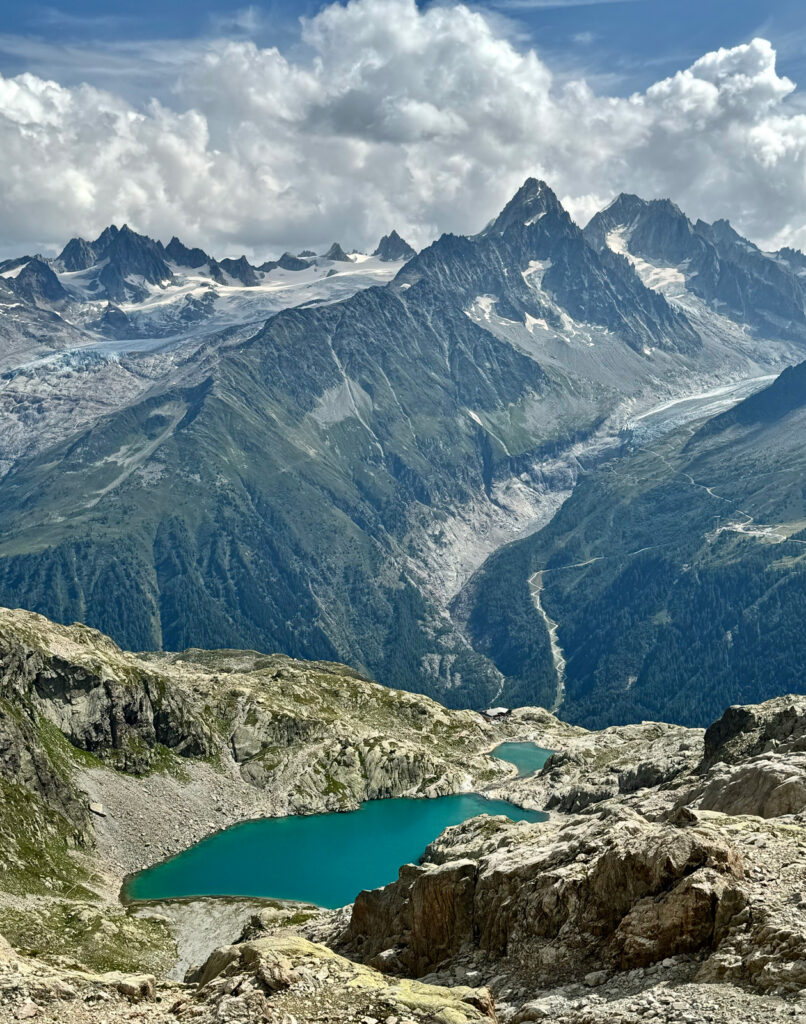
It’s like running past Champex-Lac, the lake’s stillness inverting and reflecting the looming mountain ahead that foreshadows the next big ascent.
It’s like squandering race time sampling saucisson and emmentaler at aid stations and feeling as if the lifetime’s worth of charcuterie boards have been preparing your stomach for this exact moment.
It’s like later being simultaneously in an extraordinary amount of gastrointestinal distress, joint pain, and muscle cramping, resigned to move at a pace you would have previously described as “glacial,” though now that you have seen and touched and walked inside the rapidly shrinking Mer de Glace and know it moves one meter per day, find the term a bit of an exaggeration so your mind exchanges the polysyndetic thoughts for the oft quoted Churchillian platitude, “If you’re going through hell, keep going,” (though you find the phrase less impactful when you learn there is no record of Churchill ever saying this, and consider how strange it is that some people reach a level of influence and notoriety to have pithy quotes misattributed to them).
It’s like seeing your parents, beaming smiles plastered across their faces, patiently waiting for you—longer than you told them—at Argentière, who flew across the world to show up for your weird passions.
It’s like setting an FKT for eating wedges of watermelon, while crazed French spectators indefatigably shout, “ALLEZ, ALLEZ!” and thinking how fortunate you are to be a part of this grand celebration of moving through the alps.
It’s like picking off runners on technical descents and power hiking past them on swelteringly hot climbs, telling each one they’re looking strong, only to see many of them later pass you as you are astonished by how much effort it requires to yield such little progress; *chapeau*.
It’s like realizing mid-climb how incredibly silly it is that you want OCC to be arduous, because you find meaning in challenging yourself, but not so arduous that the memory of the experience gets coded as a net negative, and the absurdity of wanting to curate the precise amount of discomfort you experience seems to be a pretty clear allegory to life in general, the illusion of control, and for all that you did to prepare for this race might actually be in fact the inverse, that this race is instead an opportunity to prepare you for what remains of your life.
It’s like coming up on an exhausted Italian runner dejectedly sitting on a rock, lightly tapping their knee, and telling them, “Andiamo, amico!” and seeing them grin and rise to their feet.
It’s like being snapped out of a heat-induced state of delirium by a French cyclist who caught up to you on their bike, with your sunglasses pouch in their hand, who excitedly says to you, “Is this yours, did you drop it? Keep going! You will be a legend in Chamonix! They will welcome you a hero!”
It’s like feeling your body start to break apart at the seams, which for some reason prompts your mind to produce the line from Virgil’s Aeneid, “A joy it will be one day, perhaps, to remember even this,” and how although to some extent this feels true and slightly helps in the moment, there is a subtle impression of embarrassment upon realizing for the second time today your mind has generated an inspirational quote; embarrassing both in the sense that this strikes you a bit trite, and a touch hollow given you’ve never actually read the Aeneid but apparently are the type of person that nonetheless cherry-picks lines that you fancy from Latin epic poems written 2,000 years ago.
It’s like staggering into the final aid station after the last ascent up to la Flégère, sitting for the first time all day, or, more accurately, using your poles to aid your quivering, waifish self into a position that resembles sitting, at which time an older French woman senses how helpless you are and brings a carafe of water from around the plastic folding table to personally fill up your soft flasks, and at this moment, your gazes meet and she smiles knowingly and you nearly cry, and you’re not quite sure but you think that in witnessing your moment of vulnerability she also tears up, though you believe her reaction might be a misperception that your own tears are because of more prosaic origins such as physical pain or the anguish of a race plan gone awry, rather than the real reason you’re crying, which is that you’ve just now fully embodied the intention you set the night prior, to move with love and gratitude all day in each moment, and whether it takes you forty minutes or four hours to get back to Chamonix, are lucidly aware that this experience, like all experiences, will end, and how unavoidably, overwhelmingly poignant this all feels, and how even if you could somehow explain all this to the French woman (lacking the linguistic ability to do so), it would absolutely ruin the uniquely human experience you just shared together, so you instead settle upon a head nod, hands in prayer position, and manage the most heartfelt “Merci” you’ve spoken all day.
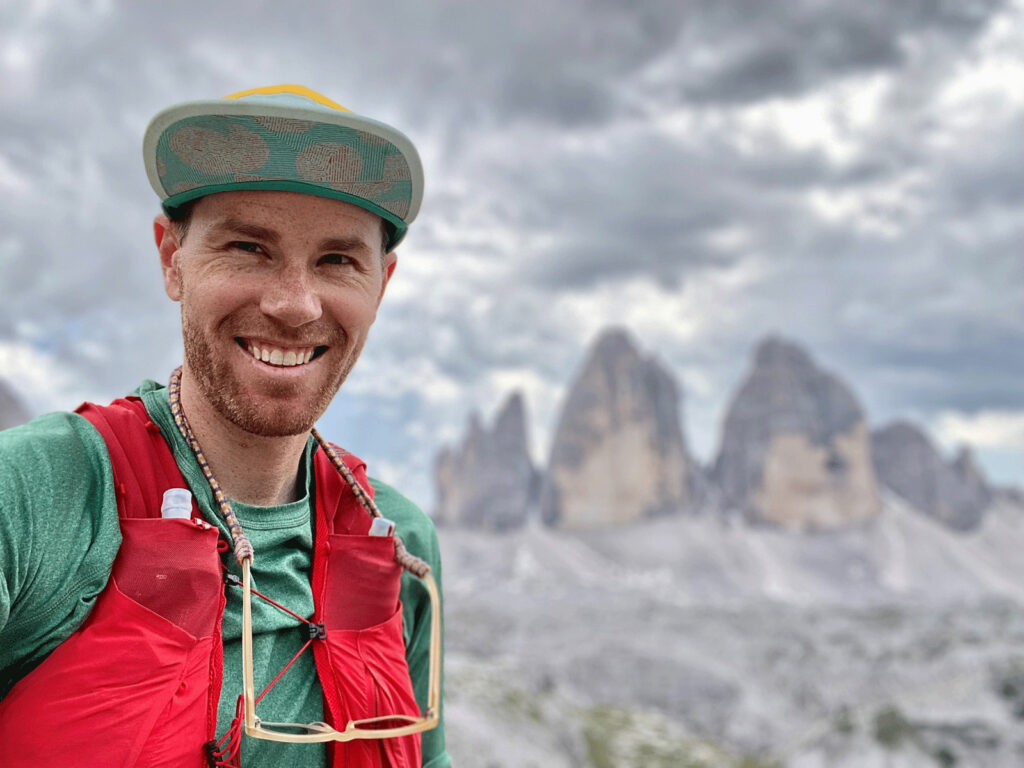
Max Wilson is, among other things, a flatlander with a passion for mountain running and climbing, a genetic counselor, and lover of soul and blues music. He has previously published an investigative journalism piece in Quillette, and most recently published in the peer-reviewed philosophy journal Neuroethics. Photos of his adventures can be found on Instagram @maxwell_wilson, and access to his writing on Substack @ Clinking Thearly | Maxwellwilson | Substack.