Every Fork in the Road
By Chantelle Robitaille | Top photo: Toni Spasenoski
“Every Fork in the Road” by Chantelle Robitaille is one of three stories selected as runners-up in the first Run the Alps Writers Residency Contest in partnership with Like the Wind magazine. Read the winning story, “Je Est un Autre” by Haley Littleton, and the runner-up stories: Max Wilson‘s “Allez, Allez” and “The Chase” by Melanie DesAutels.
I have always taken the fork in the road. Not the safe path, not the well-marked trail, but the one that disappears over the ridge and asks you to trust it. My life has been built from these forks, one choice at a time, often when I felt like I had very little left to lose.
The fork that changed everything appeared when I was in Toronto recovering from being hit by a car while training for an adventure race. My marriage had been falling apart for long enough that when my body broke too, it almost registered as an afterthought. My doctor told me, with the mild detachment of someone delivering a weather forecast, that I would never run as much as a 10K again. I tried my best to put one foot in front of the other. Some days I could barely move, but I kept going toward something I couldn’t yet name. Then a job appeared. Switzerland.
I arrived in Lucerne with three suitcases and a cat named Snowball. I was deep in a fog, hollowed out by injury and divorce, like I no longer knew who I was. The city was impossibly beautiful and entirely indifferent to my unraveling. Every morning I walked to my office window and looked out over a sparkling Lake Lucerne.
Rising above the mirror of water was Mt. Pilatus.
She was there before I arrived and she would be there long after I left. She watched over the lake with a kind of ancient patience I found myself needing. She was the first thing I saw every day, and she walked me home every night. I wanted to meet her. She wanted me to meet myself.
The trails that laced through the mountains around Lake Lucerne were not subtle invitations. To me, they were a dare. I had been told I couldn’t run a 10K, so somewhere in the logic of a person rebuilding herself from scratch, it made a certain sense to start running trails instead of roads. I felt like I had nothing left to protect.
I was slow. I was humbled, repeatedly and without mercy, by terrain that revealed every weakness in a body I was still learning to trust again. But something was happening on those trails that no amount of corporate strategy or careful living had ever produced. I was becoming someone new. Not by thinking my way there, but by moving through a landscape that had no interest in who I used to be.
My introduction to Chamonix came later, through another fork I almost didn’t take. A women’s trail running event. I had never been and didn’t know anyone to go with. I almost didn’t go.
But I went.
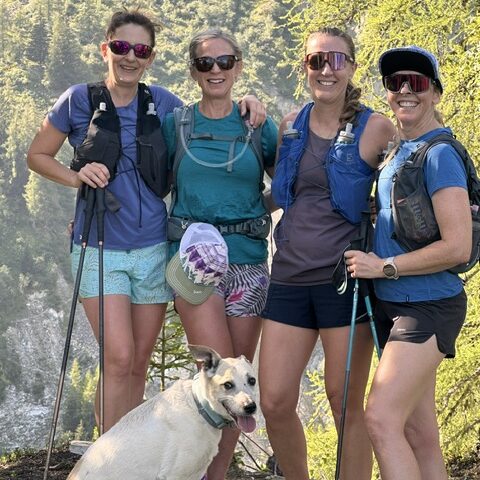
I had no idea that the women I met that day would become my family. Not in the soft way that word sometimes gets used. I mean family in the way that counts: the people who know your pace and your fear and your particular brand of stubbornness, who have seen you suffer on a mountain and chosen to come back anyway. We ran together, laughed and cried together, raced together, and travelled together to explore new mountains in new countries. Chamonix became my part-time home, not because of the mountains alone, though they are without equal. A place only becomes home when it gives you the people you can no longer live without.
I’m not sure I was aware of it at the time, but my body and my life were rebuilding in parallel. Six years after a doctor told me I was done with running, I stood on the start line of the Connemara Ultra in the west of Ireland. Atlantic light, stone walls, bog stretching to the horizon. I ran 39 miles for my 39 years. I cried somewhere around mile 30, the kind of crying that had nothing to do with pain and everything to do with the distance between who I used to be and who I was becoming.
Bodies and lives are never finished products. They keep asking things of you. Years into my Swiss chapter, another fork appeared. This one was quieter, harder to name. I had just turned 40, was racing well, and watching another relationship end at a fork neither of us had chosen the same way. It felt like a false summit. I thought I had arrived. I hadn’t. After years of managing a busy work and race schedule, my health was quietly eroding beneath it all. Hormones crashed. Job stress mounted. I was holding together a life that had outgrown its valley, coaching athletes on the side, applying science I had learned intuitively on the trails to distances and conditions the textbooks barely touched. I realized I needed to put myself back together again, not just physically, but structurally. I needed to understand, fully and deeply, what I had been doing by instinct for years.
I started to think about what might come next. I scrolled through job postings the way you might consult a map when nothing looks familiar. Nothing I was qualified to do was anything I actually wanted. What I wanted was harder to type in a search bar. I wanted to learn. I wanted to help people understand their bodies, to move with confidence and grace in harsh and beautiful places. Not to conquer the corporate world. Not to conquer anything.
So I went back to school. In my forties. I left Switzerland and landed in Gunnison, Colorado, earning a Master of Science in High Altitude Exercise Physiology. That fork led me back to the beginning. A student again, starting from scratch, building myself back up from the ground. It led to an internship, and eventually to work I had only dreamed of doing, coaching athletes drawn to the same mountains, the same distances, the same pull that found me years ago, looking out a window at a mountain across a lake. The Alps never left me. They were in every training plan I wrote, every athlete I guided toward the high places, each of them looking to meet a new part of themselves.
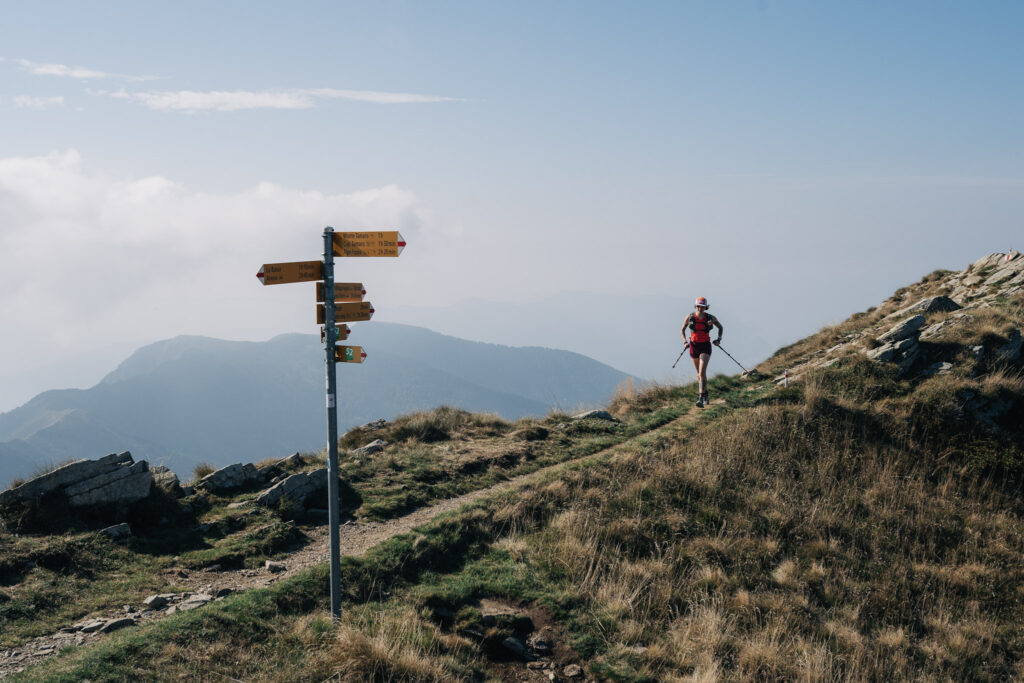
The thread that runs through all of it is not ambition, exactly. It is something closer to curiosity. A willingness to take the fork and see where it goes, even when the timing is wrong and the body is uncertain and the map runs out. The mountains taught me this more reliably than anything else. A trail above the treeline never offered me any guarantees. It offered direction, and the chance to keep finding out who I am.
Chamonix didn’t just reshape me physically. It gave me people and a place that anchored a completely different version of my life. Whenever I think about returning, it’s not as a tourist, not as a stranger. I know which way the valley tilts in the afternoon light, where the shadows fall first on the Mer de Glace, how the Balcon trails feel underfoot. I know the particular quality of light on the Aiguilles at dusk, and the feeling of sitting around a table with the people who are my chosen family, the mountains making everything else feel appropriately small.
I am still, always, looking for the next fork in the road.
I always take it.
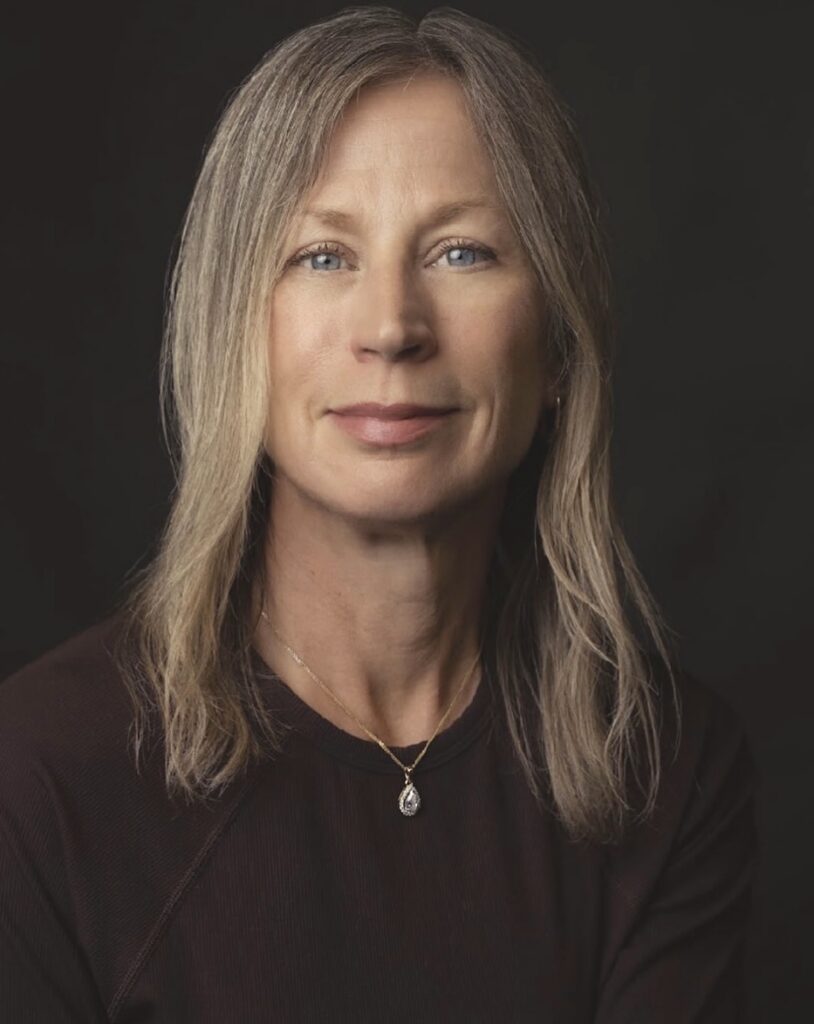
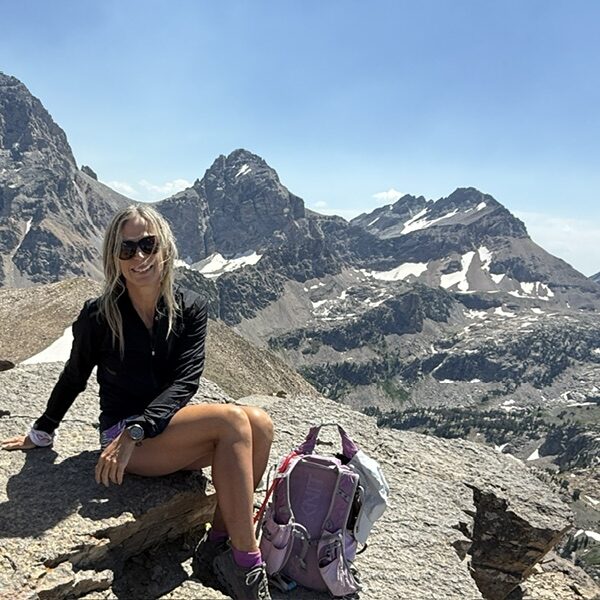
By day, Chantelle Robitaille is Director of Coaching at Uphill Athlete and by night she writes Coach Confidential, a Substack for 40+ endurance athletes who’d rather be outside chasing their goals. A sports scientist with an M.S. in High Altitude Exercise Physiology, she coaches trail and ultra runners, skimo racers and mountain athletes from elite to recreational. She lives in the shadow of the Tetons, where she plays as enthusiastically as she coaches.